Borrow or Buy? A Library of Things Cost Worksheet
Compare borrowing fees, collection journeys, consumables and repeat use before buying an occasional-use household tool.

Grow Here Editorial
Editorial Team
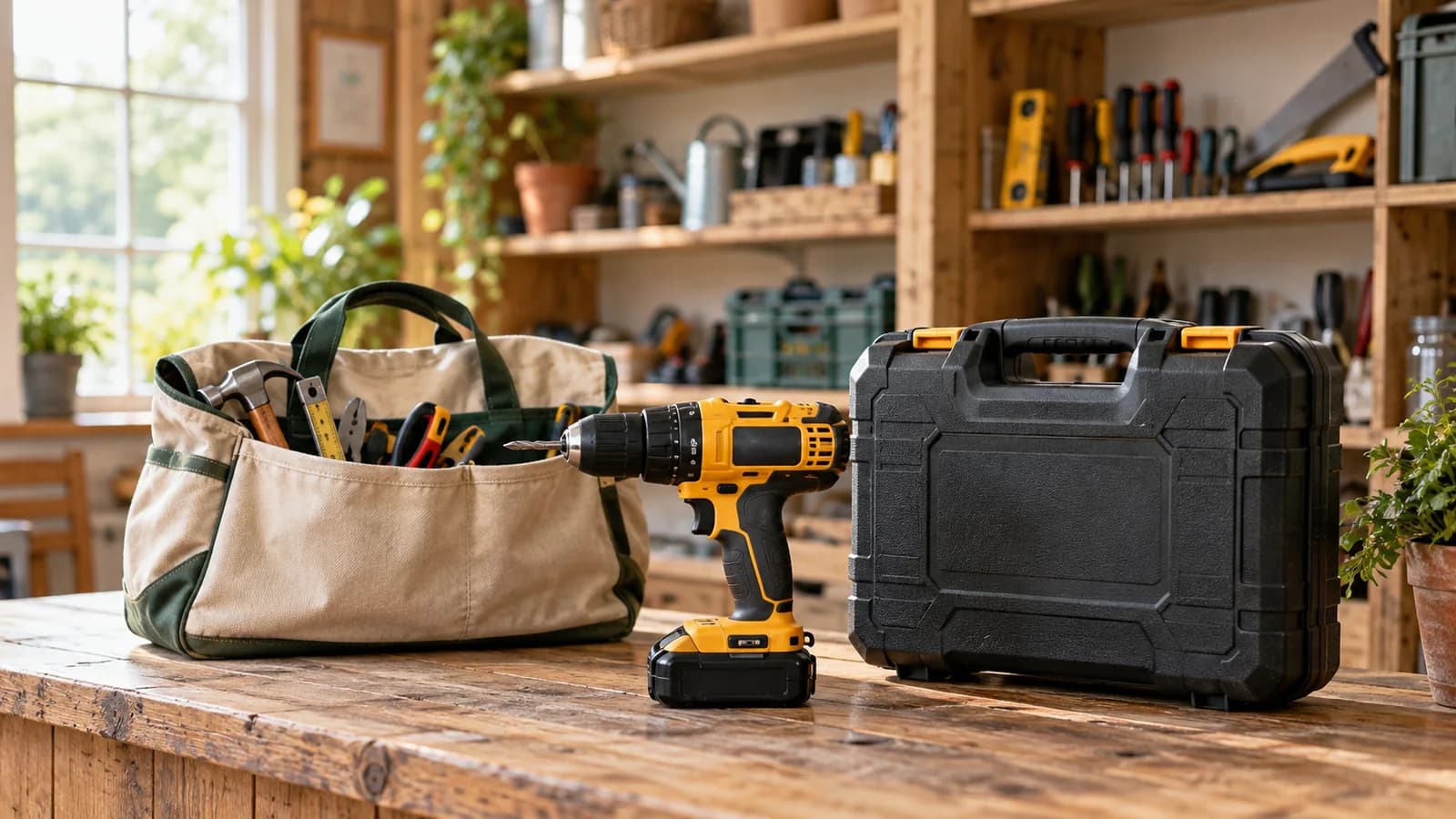
Borrowing can suit an occasional household job when a suitable item is available, collection is practical and the full cost is lower than ownership. Compare the complete borrowing occasion with buying a suitable equivalent, not just a daily hire fee with a shop price. Availability and safe use matter as much as the arithmetic.
A Library of Things is one possible route. Independent sharing libraries, commercial hire and informal borrowing have different terms; do not assume one organisation's rules apply everywhere in the UK.
Define the job before the equipment
Write down the material or task, the required result, your available time and any skill or permission constraints. An item being available to borrow does not make the task suitable for DIY. Do not use borrowing as a shortcut around electrical, structural or other specialist work.
For an occasional cleaning machine, check the surface and product instructions. For a tool, confirm the required accessory and protection before reserving. Buying or hiring the wrong equipment is still waste, even at a low price.
Our buy-less guide can help distinguish the actual need from the attraction of owning a new device.
Check the local service's terms
Library of Things describes reserving, collecting and returning shared household equipment. Its borrowing terms govern its own service, including responsibilities associated with use and return. Read the current terms of whichever provider you choose.
Check membership requirements, fees, deposits or payment holds, cancellation, late return, cleaning, damage and missing accessories. Confirm opening or locker access times. A refundable deposit is not necessarily a final cost, but it can affect the cash you need available.
Do not assume the nearest public library runs a tool-sharing service. Search by postcode and verify the actual collection point before planning a journey.
Calculate the complete borrowing occasion
Use: borrowing cost = non-refundable access fees + hire fees + necessary travel + required consumables + other unavoidable charges.
Count collection and return journeys. Keep optional purchases separate. If you value travel time in the comparison, show it as a separate assumption rather than disguising it as a fee charged by the provider.
Suppose a suitable item costs an illustrative £12 to borrow for the job, £6 in travel and £4 in consumables: £22 total. A suitable purchase costs £100 plus the same £4 consumables. These are invented figures, not advertised Library of Things prices.
At the same £18 fee-and-travel cost on later occasions, ownership's £100 equipment price is overtaken after roughly six occasions, before maintenance, storage, resale value and changing fees. The shared consumables cancel only if they really are equivalent under both options.
Test the practical constraints
Availability
Can the item be booked for the required dates, with realistic time for learning and returning it? Do not commit to a time-sensitive task assuming an unreserved item will remain available.
Transport and handling
Check packed dimensions and weight. A low hire fee loses its advantage if you cannot carry the item safely or need an expensive unplanned journey.
Storage and repeat use
Owning can be convenient for repeated suitable work, but include the space needed between uses. Our small-home storage guide can help you assess that space without assuming every tool needs a permanent place.
A decision for an uncertain future
If you only know about one upcoming job, do not justify a purchase by inventing ten future uses. Calculate one known use, then a separate repeat-use scenario. Borrowing once may teach you whether the item suits the task before any purchase.
On collection, inspect the item and accessories as the provider instructs. Report damage promptly and do not improvise a repair. For your own damaged possessions, our Repair Café preparation guide describes a different route.
Frequently asked questions
Is borrowing always cheaper?
No. Frequency, fees, transport and suitability can change the result.
Should I count a refundable deposit as a cost?
Show it separately as a cash requirement and understand conditions that could prevent its return.
Are all sharing libraries free?
No. Check the actual provider's current fees and terms.
Can I lend a borrowed item to a neighbour?
Only if the provider's terms allow it. Do not assume permission transfers.
What if I need it again next month?
Update the comparison with real repeat use and availability rather than treating the first decision as permanent.
Compare one real job
Check suitability, reserve availability and calculate fees plus journeys. Compare one known use before adding uncertain future uses. Choose the route you can use and return safely, then keep the figures for the next decision.
Grow Here Editorial
Editorial Team
Curating practical, evidence-backed advice for greener homes, sustainable systems, and intentional daily living across Grow Here.
Related Stories

Your First Repair Café Visit: A Practical UK Checklist
Check what the event accepts, prepare a useful fault description and leave with a clear next step even when an item cannot be repaired.

Household Phone Boundaries That Keep Urgent Contact Working
Agree quiet times around real caring and shift-work responsibilities, configure exceptions and test the contact routes together.

Declutter Photos Safely: Check the Backup Before Deleting
Distinguish synchronisation from independent copies, test recovery and use a small-batch process before clearing a household photo library.