Your First Repair Café Visit: A Practical UK Checklist
Check what the event accepts, prepare a useful fault description and leave with a clear next step even when an item cannot be repaired.

Grow Here Editorial
Editorial Team
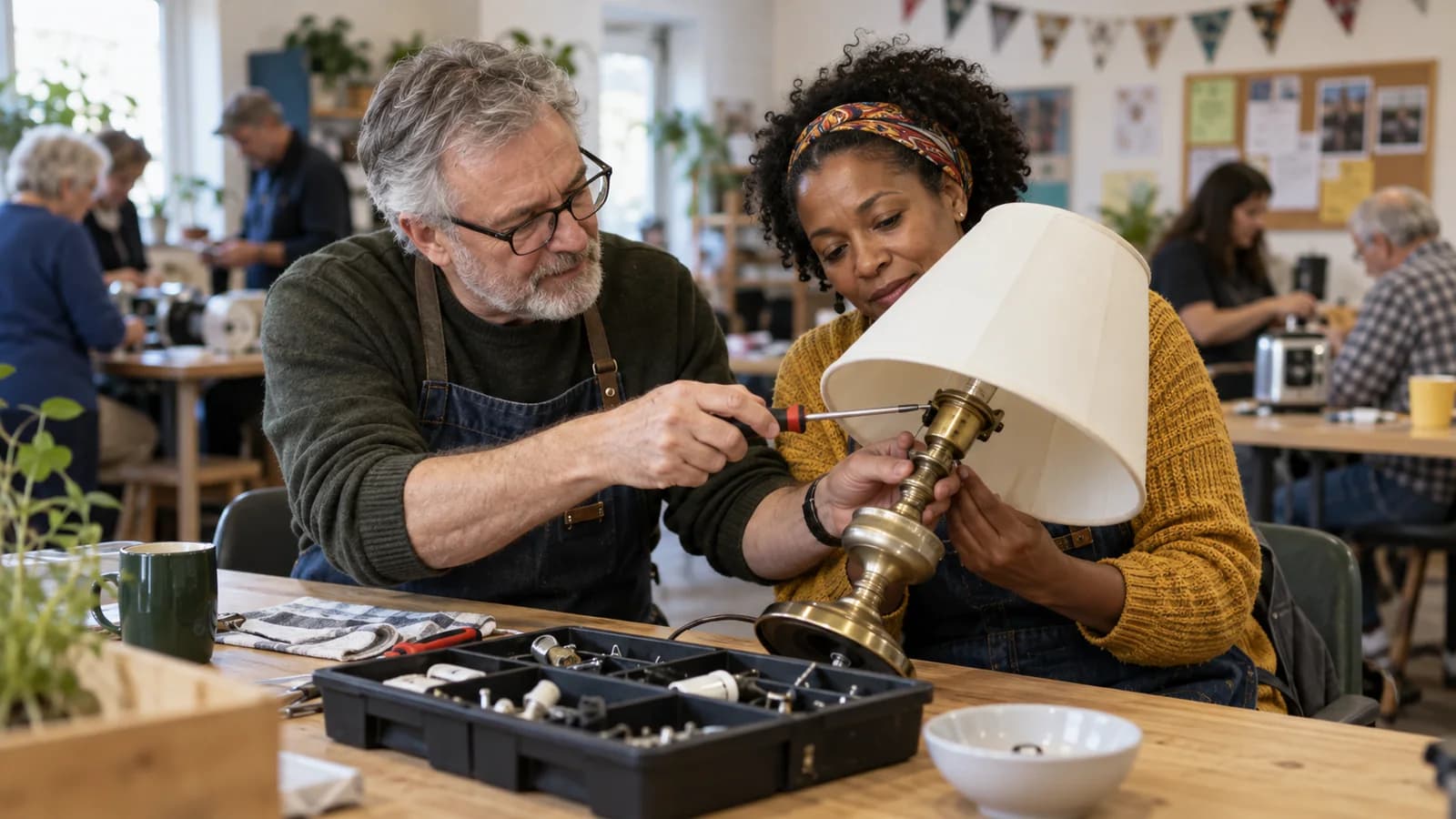
Before visiting a Repair Café, check the specific event's opening time, booking rules and accepted items. Bring a clear fault description and relevant accessories only as requested. A repair attempt is not guaranteed, and arriving prepared helps volunteers assess what is possible without repeating information you could have gathered at home.
This guide covers preparation and follow-up. It does not suggest opening electrical equipment, buying speculative parts or using a visibly unsafe item to demonstrate its fault.
Confirm the event fits the item
Use the Repair Café directory to find a nearby event, then check its current local notice. A directory entry is not proof that a particular specialist will attend or that every item is accepted that day.
Ask about booking, item limits, size restrictions, accessibility, waiting arrangements and whether you need to remain with the item. Confirm any costs for parts or other local arrangements. Do not leave an item outside a venue or treat the event as a donation point.
The Repair Café visitor FAQ explains the collaborative nature of these events, the range of possible items and the importance of checking specialist availability. It is not a commercial repair guarantee.
Write a fault card
Make the description short enough to read at the table:
- Item and exact model, with a photograph of the label where safe.
- What changed and when it was first noticed.
- What happens during ordinary use, without repeatedly recreating a hazardous fault.
- Any known drop, spill, previous repair or missing part.
- What you have already tried within the user instructions.
“The zip separates after fastening” is more useful than “broken coat”. “It stopped during normal use and has not been used since” is better than repeatedly powering an appliance that smells burnt.
For a digital device, back up important data where possible before attending. Our photo-backup checklist explains why a visible cloud library is not always an independent backup.
Pack deliberately
Bring only the accessories the organisers need to assess the fault, such as the correct charger or a matching component. Keep detached pieces in a labelled bag. Clean the item appropriately without introducing moisture into equipment or obscuring the damage.
Avoid sharing passwords in a note attached to a device. Ask how access will be handled if testing requires it. Remove unnecessary sensitive material and retain control of account credentials.
If an item is heavy or unsafe to transport, ask first. Do not assume volunteers can collect it or visit your home. A washing-machine fault, for example, needs a different route from a small portable item; our repair-versus-replace worksheet can help with that separate decision.
Agree the scope at the table
Explain what outcome matters: restoring function, understanding the fault or finding the correct professional route. Ask before any change that affects appearance or removes data. Discuss uncertainty and possible parts costs before proceeding.
Be prepared for “not suitable here” or “needs a specialist”. A responsible limit is useful information. Do not pressure a volunteer to bypass a safety concern because the item is inexpensive.
Imagine a lamp arrives without its power supply and the owner knows only that it flickers. The event may be unable to assess it. A confirmed accessory list and fault card would have prevented the wasted trip. This fictional example illustrates preparation, not a judgement about any particular event.
Leave with an outcome record
Write down what was done, parts used, advice given and any restriction on further use. If repair is incomplete, record the exact next step before buying parts. Ask what further testing or professional assessment is needed rather than assuming that switching on once proves safety.
Keep the record with the item. Our buy-less guide places repair among broader purchasing decisions without implying every object can or should be saved.
Build travel and waiting time into the visit rather than rushing between commitments; our slow-living guide for busy people offers practical ways to leave those gaps.
Frequently asked questions
Is a Repair Café a guaranteed free repair service?
No. Check local arrangements, including parts and donations, and expect a collaborative attempt rather than a guarantee.
Should I buy replacement parts first?
Only after reliable identification and agreement. The wrong part can waste money and complicate assessment.
Can I drop an item off and leave?
Follow the event's rules. Do not assume unattended drop-off is accepted.
Can volunteers repair every electrical item?
No. Skills, equipment, safety limits and event policies vary.
What if the item cannot be repaired?
Ask for a clear record of the limitation and appropriate next options, including a specialist or responsible disposal route.
Prepare the conversation
Confirm acceptance, write the fault card and pack the agreed accessories. Leave with a record of the outcome. Even an unsuccessful attempt can support a better next decision when its limits and findings are clear.
Grow Here Editorial
Editorial Team
Curating practical, evidence-backed advice for greener homes, sustainable systems, and intentional daily living across Grow Here.
Related Stories
Borrow or Buy? A Library of Things Cost Worksheet
Compare borrowing fees, collection journeys, consumables and repeat use before buying an occasional-use household tool.

Household Phone Boundaries That Keep Urgent Contact Working
Agree quiet times around real caring and shift-work responsibilities, configure exceptions and test the contact routes together.

Declutter Photos Safely: Check the Backup Before Deleting
Distinguish synchronisation from independent copies, test recovery and use a small-batch process before clearing a household photo library.