Balcony Wind Protection for Plants: A UK Decision Guide
Work out whether moving pots, changing plants or an approved permeable screen is the right response to an exposed balcony.

Grow Here Editorial
Editorial Team
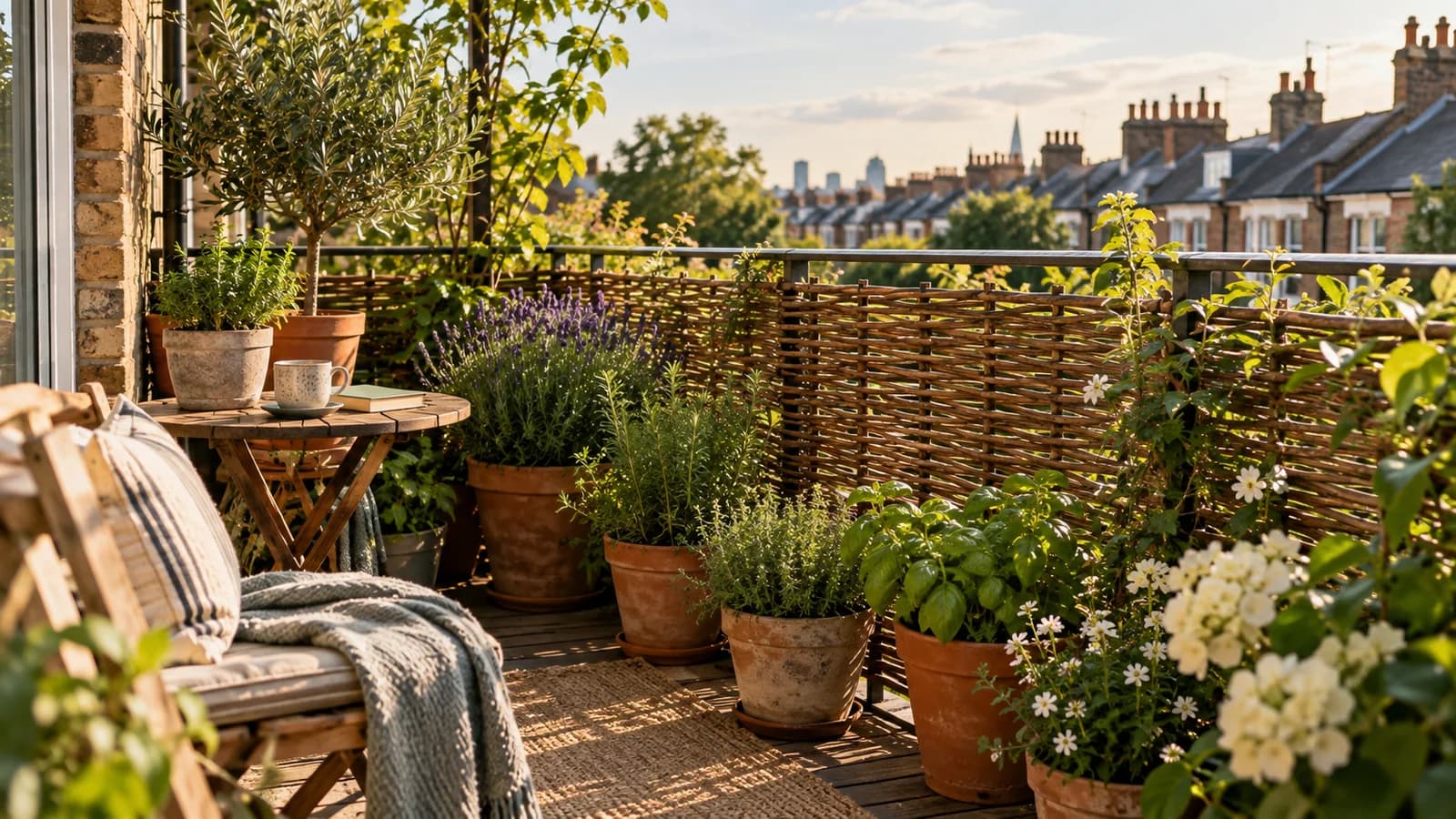
Start balcony wind protection by moving vulnerable plants away from exposed edges and checking what your building permits. A screen can help only if its design and fixings are suitable for the location. On a high balcony, an improvised barrier can create a greater problem than the wind damage you hoped to prevent.
This guide helps you choose between rearranging containers, changing planting and asking about an approved screen. It is not a structural specification or a promise that a sheltered-looking corner is safe in storms.
First distinguish exposure from plant choice
A plant that repeatedly leans, loses leaves or dries rapidly may be poorly matched to its position. Those symptoms do not prove wind is the sole cause. Check moisture, light and root condition too. Our peat-free watering diagnosis helps when leaves droop despite apparently damp compost.
Draw a plan with the balcony door, drainage outlets, furniture and containers. Observe from a safe indoor position during ordinary windy weather. Mark which plants move, where light objects collect and which corners appear sheltered. Do not lean over a railing or go outside during dangerous conditions to complete a record.
Use the least complicated suitable response
The RHS windbreak guide explains why a semi-permeable barrier can reduce wind while a solid barrier creates turbulence. That garden principle does not establish the engineering suitability of a particular balcony screen.
Use this editorial decision ladder:
- One plant is suffering: move that plant if safe, then reassess whether the new light suits it.
- Tall containers are unstable: remove the immediate hazard and review the container design. Do not simply add heavy ballast to an unassessed balcony.
- Most plants struggle in the same area: consider lower-growing planting or using fewer exposed positions.
- You want a permanent screen: ask the freeholder, landlord or managing agent about approval, permitted products and fixing requirements before buying.
- An existing screen or railing moves: stop using the affected area and report the defect. Planting is no substitute for repair.
Plan containers around access and stability
The RHS balcony guidance favours containers with a low centre of gravity in exposed locations. It also highlights the need to consider building constraints.
For your own layout, write the mature height beside each plant rather than using its nursery size. Leave room to open doors and maintain drainage. Keep pots entirely within the permitted area, away from climbable arrangements beside guardrails. Check wet container weights and concentrated loads with the responsible building professional where necessary.
Avoid treating a line of tall, top-heavy plants as a quick windbreak. It may introduce the same instability you are trying to solve. For planting combinations, use our balcony herb guide and choose species by the actual light and exposure rather than by appearance alone.
A worked layout decision
Imagine a rented flat with three herb pots and a tall decorative container. The herbs dry unevenly; the tall pot rocks in moderate wind. The tenant has no permission for railing attachments.
The first action is to address the unstable pot, not to attach fabric around the balcony. Next, the tenant records which herb pots need moving and asks management about container restrictions. If a suitable shelter solution is unavailable, using only the more protected planting area may be the best decision. This is a hypothetical comparison, not a tested arrangement.
Check after changes
Record the date, position, plant condition and watering observations. A successful move should improve the specific problem without obstructing access or putting the plant into unsuitable shade. If stems keep breaking, do not keep purchasing taller screens: review whether that space is appropriate for the plant at all.
Before autumn storms, inspect loose accessories from a safe position and follow building guidance. Avoid making last-minute modifications in strong wind.
Use the light-and-layout assessment in our small-space garden guide when comparing possible new pot positions.
Frequently asked questions
Is a solid privacy screen also a good windbreak?
Not necessarily. Wind behaviour and structural loads need assessment; privacy alone is not a suitability test.
Can I attach netting to the railing?
Check permission and the building's requirements first. This guide cannot confirm that your railing or fixing method is suitable.
Should I add stones to make pots heavier?
Do not add unassessed loads. Consider stability and balcony capacity together.
Why do sheltered pots still dry quickly?
Container size, plant growth, sunlight and the growing medium also affect watering needs. Check the compost rather than assuming exposure is the only cause.
Does a higher floor need a taller screen?
There is no universal rule. Building geometry and local exposure matter, and a taller barrier may increase loading.
Decide before you buy
Identify the unstable or struggling item, check the building rules and test a safe layout change first. Only commission a screen once its permission, fixings and suitability are resolved. A smaller workable planting area is easier to maintain than an exposed arrangement requiring constant rescue.
Grow Here Editorial
Editorial Team
Curating practical, evidence-backed advice for greener homes, sustainable systems, and intentional daily living across Grow Here.
Related Stories

Overwinter Strawberries in Pots: A UK Exposure Checklist
Assess cold, wet and wind around potted strawberries, plan suitable protection and check plants again as spring growth returns.

Balcony Herb Garden: 10 Easy Herbs to Grow in Pots
Start a balcony herb garden with easy herbs for pots, simple container tips, watering advice and a realistic setup for small spaces.

Autumn Pollinator Pots: Plan Flowers for a Small UK Garden
Build a practical late-season flowering plan using container size, exposure and overlapping bloom periods rather than a shopping list.