Overwinter Strawberries in Pots: A UK Exposure Checklist
Assess cold, wet and wind around potted strawberries, plan suitable protection and check plants again as spring growth returns.

Grow Here Editorial
Editorial Team
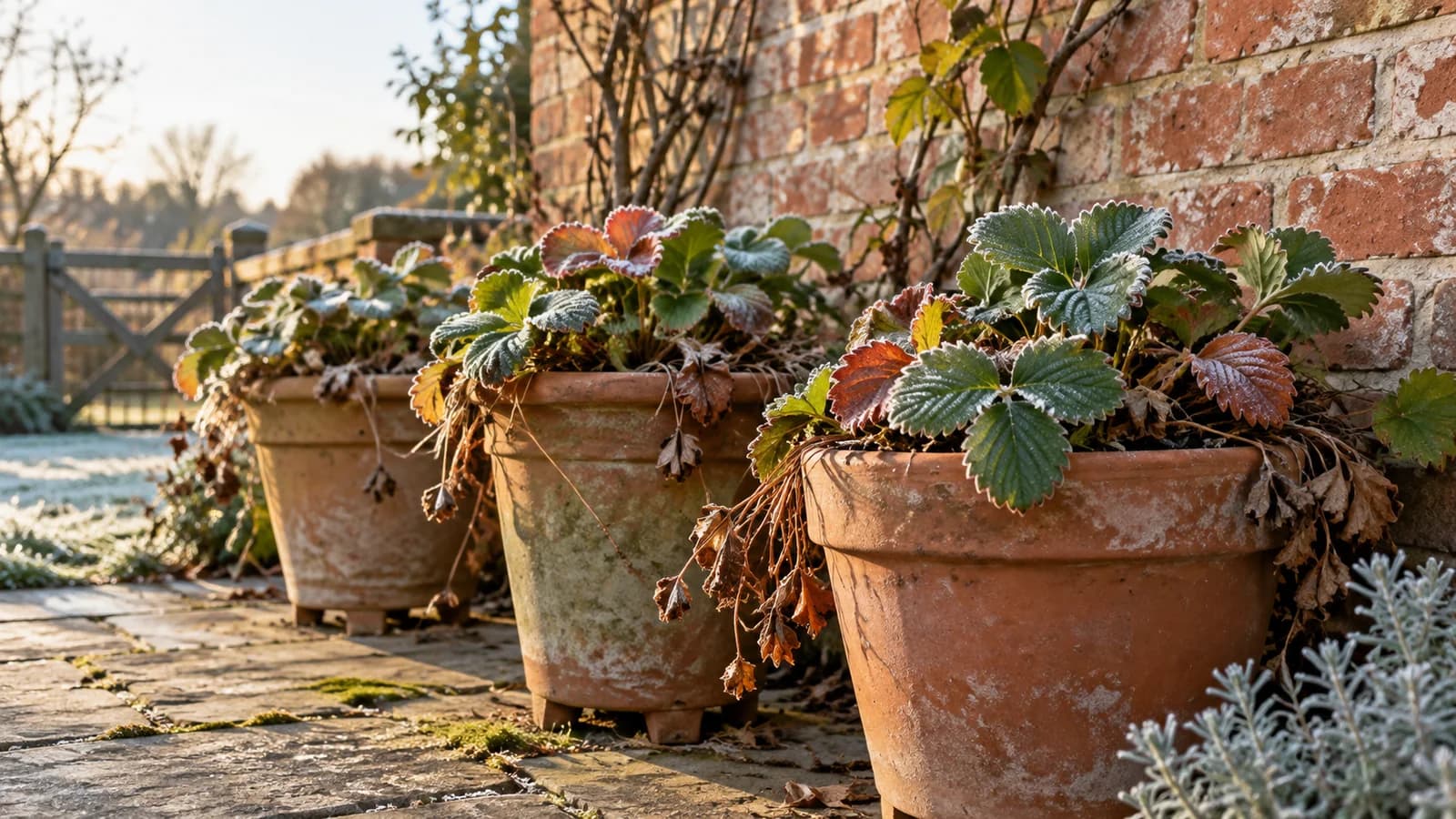
To overwinter strawberries in pots, review exposure and drainage before adding protection. A container sitting in retained rainwater needs a different response from a small pot exposed to cold wind. Check the variety's guidance, the local forecast and the actual position rather than applying one winter treatment across the UK.
This guide covers keeping established plants through winter, not forcing an early crop or guaranteeing next year's yield. Young, damaged or unidentified plants may need more specific advice.
Make an autumn record of the plants
Write down variety, approximate age, container type and any persistent problems. Photograph each pot before moving it. Remove loose litter and inspect for obvious damage without digging around healthy roots just to complete a checklist.
The RHS strawberry growing guide describes container growing and notes that vine weevil larvae can be a particular problem in pots. Keep poor growth or root damage on the investigation list rather than assuming winter weather explains every symptom.
If you are planning the wider edible area, our balcony herb guide helps with container grouping. Give strawberries their own seasonal record instead of carrying over a summer herb watering routine.
Use a three-part exposure check
Cold
Is the container small, thin-walled or raised in an exposed position? Can it be moved safely to a more sheltered permitted location? Do not move heavy wet pots alone or add large loads to a balcony without considering its restrictions.
Wet
Can excess water escape, and is the container standing in a saucer or blocked recess? Check the drainage path before putting insulation around the pot. Protection that traps water can create a new maintenance problem.
Wind
Does foliage or the container itself move excessively? Resolve instability before buying fleece or other covers. Our balcony wind guide explains why improvised railing screens need particular care.
Match protection to the problem
The RHS winter damage guidance recommends sheltered positioning and grouping containers where appropriate, with protection chosen for conditions. Use its advice alongside the requirements of the particular plant.
An editorial decision card can make the next action clearer:
- Sheltered pot with free drainage: inspect periodically and avoid unnecessary disturbance.
- Exposed small pot: assess a safe move or suitable container insulation, retaining drainage and access.
- Wet base after rain: address standing water and drainage before extra covering.
- Persistent crown or root concern: seek plant-specific diagnosis rather than repeatedly changing protection.
- Unstable hanging or raised container: prioritise safe positioning and building guidance.
Do not bury the crown under an arbitrary mound of wet material. Likewise, avoid treating a warm living room as the default winter destination for an outdoor plant. Ask the nursery for guidance if the variety or condition is uncertain.
A realistic two-position comparison
Imagine identical-looking pots in a sheltered courtyard and on an open elevated balcony. The courtyard pot has an unobstructed outlet; the balcony pot sits inside a decorative outer container collecting rain. The second pot needs its drainage arrangement reviewed before insulation is considered.
The point is not that one region is always colder or wetter. The arrangement can matter as much as the postcode. Record the change and check it after the next spell of relevant weather. This comparison is illustrative, not an experiment.
Keep a winter and spring check routine
After notable cold, rain or wind, inspect when safe. Look for displaced protection, retained water, instability and changes in the plant. Do not assume every winter pot needs watering, or that none does. Our compost moisture diagnosis explains how to check beneath a misleading surface.
As growth resumes, reassess covers, space and access. Check flowering plants for forecast frost risk using strawberry-specific guidance. Winter protection and spring flower protection are related tasks, but they are not necessarily the same arrangement.
Use our small-space garden planning guide to identify a realistic sheltered position before rearranging several pots.
Frequently asked questions
Must every strawberry pot go indoors?
No. Suitability depends on the plant, location and conditions. An indoor room is not automatically appropriate.
Should I cut off all leaves in autumn?
Do not strip plants indiscriminately. Follow variety-specific maintenance guidance and distinguish damaged material from healthy growth.
Can I stop watering until spring?
Check actual moisture. Weather, shelter and pot design can produce different conditions.
Is fleece enough for any frost?
No protection offers an unconditional guarantee. Check forecasts, plant hardiness and how the cover is used.
Why did one pot fail beside a healthy one?
Compare drainage, root health, plant age and exposure. Proximity does not prove identical conditions.
Prepare one pot at a time
Record the plant, clear the drainage route and choose a safe sheltered position where needed. Keep the winter plan simple enough to inspect, then review it when spring growth changes the plant's needs.
Grow Here Editorial
Editorial Team
Curating practical, evidence-backed advice for greener homes, sustainable systems, and intentional daily living across Grow Here.
Related Stories

Balcony Wind Protection for Plants: A UK Decision Guide
Work out whether moving pots, changing plants or an approved permeable screen is the right response to an exposed balcony.
A Balcony Wormery in Winter: Is Your Setup Suitable?
Check shelter, food input, maintenance and a backup waste route before starting or overwintering a wormery in a UK flat.

Autumn Pollinator Pots: Plan Flowers for a Small UK Garden
Build a practical late-season flowering plan using container size, exposure and overlapping bloom periods rather than a shopping list.