Peat-Free Compost Looks Dry: Should You Water It?
Diagnose a dry surface, heavy pot or fast runoff before watering peat-free containers, with a practical UK balcony record sheet.

Grow Here Editorial
Editorial Team
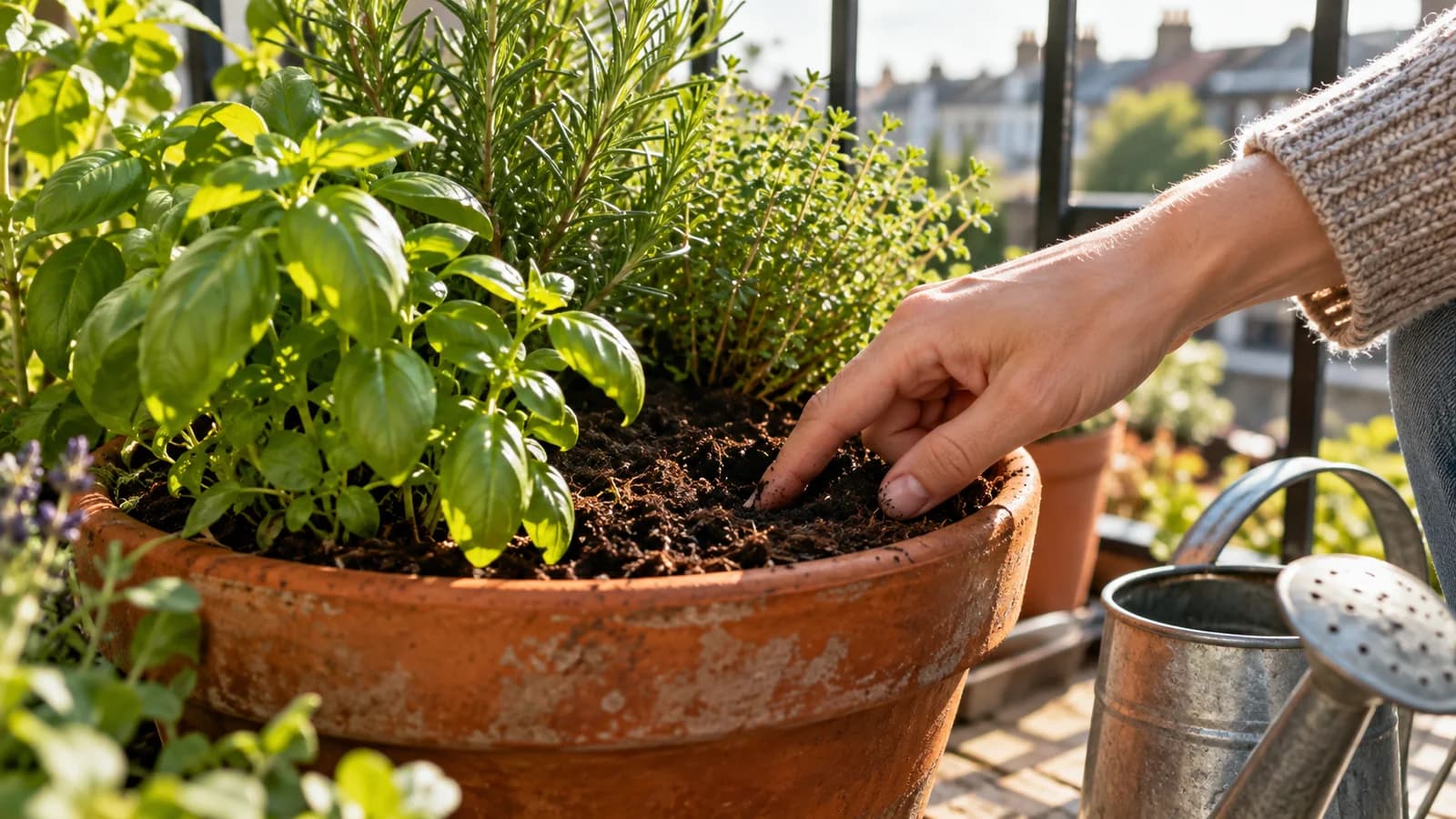
Before watering peat-free compost, check below the surface and compare the pot's weight with its usual watered weight. A pale surface alone cannot tell you whether roots need water. This guide helps you decide what to check next when the visual clues disagree.
The scope is established outdoor container plants in UK gardens and balconies. Seeds, specialist plants and indoor growing systems need their own instructions. For planting choices, start with our balcony herb garden guide; this article deals with diagnosing moisture after planting.
Start with three observations
The RHS container watering guidance recommends checking moisture inside the pot before watering. Its peat-free compost choices guide explains why the growing mix should suit the plant and task.
Make these observations together, rather than treating any one as a verdict:
- Gently check the compost below the surface without disturbing roots. Does it feel dry, cool and damp, or wet?
- If the container is small enough to lift safely, compare its weight with what you remember after watering and drainage.
- Look beneath the pot. Are drainage holes open, or is a saucer holding water against the base?
If you cannot safely lift a planter, leave it in place. A heavy container on a balcony is not worth a back injury or a fall risk.
Use a diagnosis card before adding water
This is an editorial troubleshooting framework, not a tested moisture scale. Plant requirements take precedence.
- Dry surface, damp lower compost, familiar heavy weight: pause and recheck later. Photograph the surface so you learn how that mix looks while still moist.
- Dry lower compost and unusually light pot: water slowly, observe absorption and check again afterwards.
- Wilting with wet compost: investigate drainage, exposure and root condition. More water is not an automatic remedy.
- Immediate runoff but a dry interior: check whether water is bypassing the compost at the pot edge. Apply it more slowly and reassess the interior.
- Different results in neighbouring pots: record them separately. Do not water the whole group just because one needs it.
Water deliberately, then check the result
The RHS container watering guide advises slow watering close to the compost, with a moisture check first. It notes that brief rain may not penetrate far into a container and that wind can increase water loss. Stop around the first drainage rather than continually flushing the pot.
Choose one manageable pot as your learning container. Observe where the water goes: into the compost, over the rim, or down a gap. After drainage, check whether the previously dry area has become moist. Write down what happened before repeating the same approach on other containers.
For containers you cannot easily inspect, resist compensating with a very large dose. Check the container design and access to its drainage first. If watering repeatedly leaves a wet base and dry upper areas, review the planting medium and pot arrangement with a nursery rather than adding more water indefinitely.
Keep a seven-day record without imposing a schedule
Use a notebook with these columns: date and time; plant and pot; exposure; surface appearance; lower moisture; relative weight; action; result. Checking is scheduled; watering remains conditional.
For example, imagine mint and rosemary beside each other on a partly sheltered balcony. On Monday, both surfaces look pale. The mint's lower compost feels dry; the rosemary's is still damp. Record different actions. This illustrative scenario is not a watering prescription for either species.
At the end of the week, ask which clue predicted the lower moisture most reliably. You may discover that one pot's surface changes colour long before the root zone dries. That observation is useful for your own setup, but it does not prove anything about every peat-free brand.
Adjust for autumn and winter
In October, a balcony can move between wind-driven drying and prolonged rain. Check where rain actually lands: a roof overhang may shelter pots even when the pavement below is soaked. Keep notes after moving a container, because its old routine may no longer fit.
In cold weather, inspect drainage and retained water as carefully as dryness. Follow the plant's seasonal care requirements. Our small-space garden guide can help you review positioning without buying a new set of containers.
Frequently asked questions
Does a dry surface mean the whole pot is dry?
No. Check below it. A surface observation cannot establish moisture throughout the container.
Should I water every peat-free pot daily?
No universal daily rule suits different plants, containers and weather. Use checks to decide.
Why does water run straight out?
Check application speed, gaps at the edges and moisture inside the compost. Runoff alone does not establish that the root zone has been wetted evenly.
Can I use a cheap moisture meter instead?
Treat it as an additional clue. Compare readings with direct observations and follow the device instructions; do not assume its scale represents every growing medium accurately.
Should I replace all my compost after one watering problem?
First diagnose drainage, watering technique and suitability for the plant. Record the bag details before changing the mix so you can make a useful comparison.
Your next watering check
Choose one pot today. Record its surface, lower moisture and drainage condition before acting. Repeat after your next watering. That small comparison gives you a more useful starting point than a universal timetable or a recommendation based only on the bag's branding.
Grow Here Editorial
Editorial Team
Curating practical, evidence-backed advice for greener homes, sustainable systems, and intentional daily living across Grow Here.
Related Stories

Autumn Pollinator Pots: Plan Flowers for a Small UK Garden
Build a practical late-season flowering plan using container size, exposure and overlapping bloom periods rather than a shopping list.

Balcony Wind Protection for Plants: A UK Decision Guide
Work out whether moving pots, changing plants or an approved permeable screen is the right response to an exposed balcony.
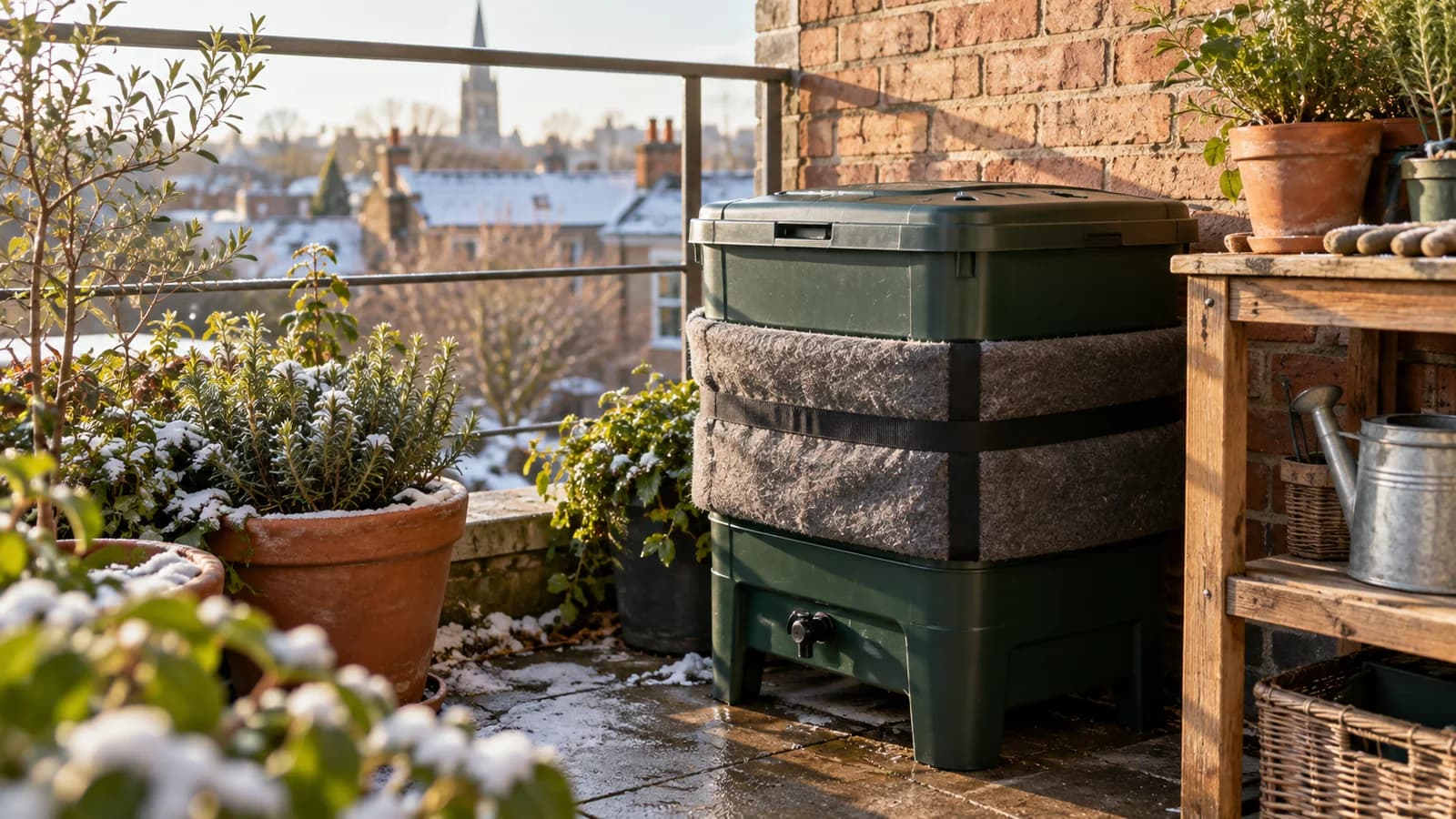
A Balcony Wormery in Winter: Is Your Setup Suitable?
Check shelter, food input, maintenance and a backup waste route before starting or overwintering a wormery in a UK flat.