A Balcony Wormery in Winter: Is Your Setup Suitable?
Check shelter, food input, maintenance and a backup waste route before starting or overwintering a wormery in a UK flat.

Grow Here Editorial
Editorial Team
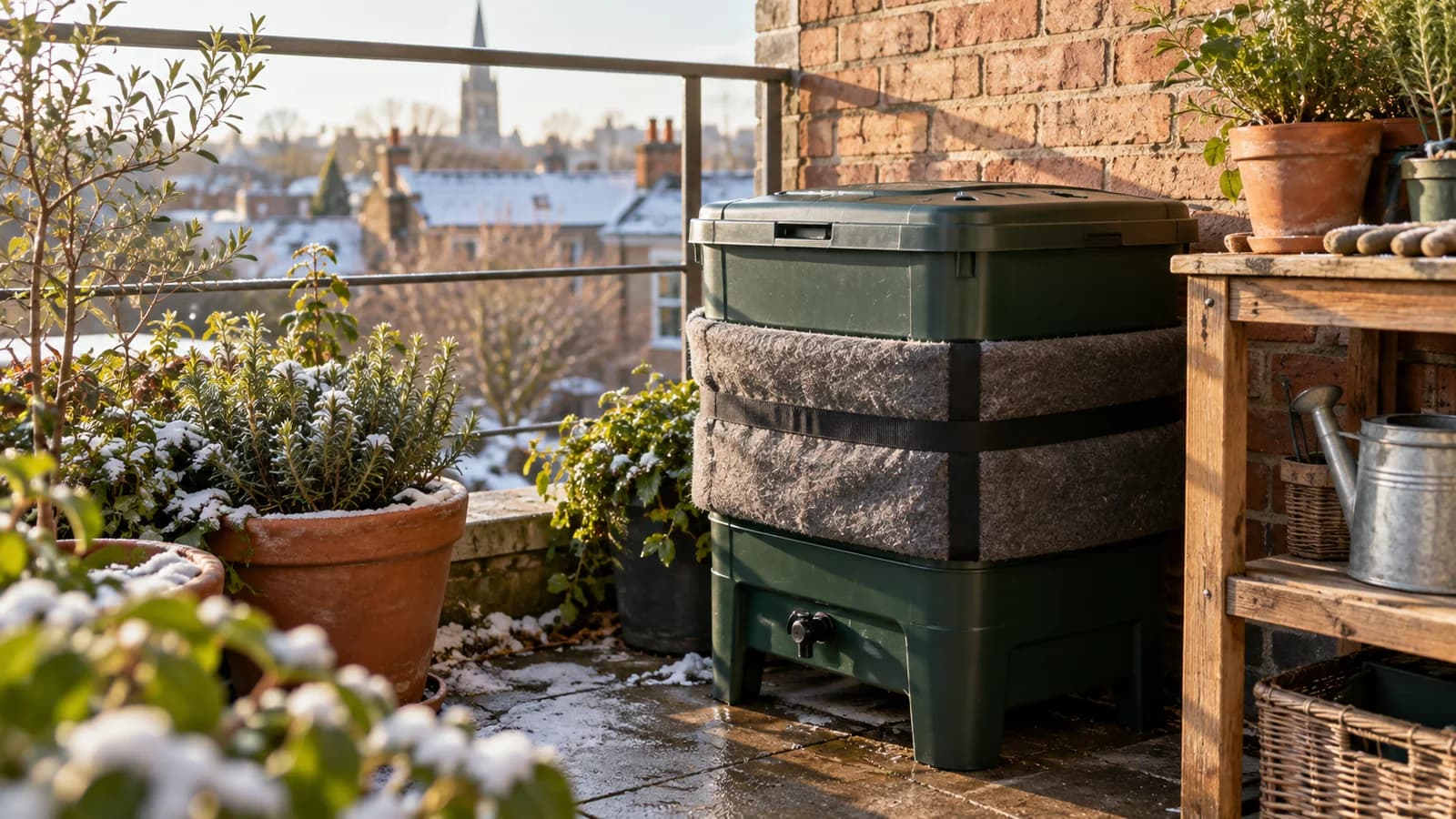
A balcony wormery can work only if you can protect it from unsuitable conditions, inspect it regularly and reduce feeding when processing slows. It is not a guaranteed route for all of a flat's food waste. Before starting in winter, decide where excess scraps will go and whether a suitable sheltered position is available.
The main question is ongoing capacity, not whether a bin fits beside the door. A living system needs attention even when a holiday, cold spell or busy week interrupts your usual routine.
Check four requirements before buying
The RHS worm composting guide says composting worms become less active below 10°C and recommends a sheltered location. It distinguishes composting worms from ordinary soil-dwelling earthworms and warns against overfeeding and waterlogging.
Use these four checks as an editorial suitability screen:
- Permission and position: the bin must comply with building rules without obstructing access or drainage.
- Shelter: identify a permitted location for cold or very hot conditions before they arrive.
- Maintenance access: can you inspect bedding and drainage without lifting a full bin awkwardly?
- Alternative disposal: check your council's food-waste service or another permitted route for material the wormery cannot accept.
If any answer is unresolved, delay buying the worms. Our small-space growing guide can help you assess competing uses of the balcony.
Plan input around observed processing
Follow the supplier's setup instructions and allow a new colony to settle. Begin with a small suitable input, then inspect how much remains before adding more. Do not choose a target weight of scraps from an online claim and keep feeding to it regardless of conditions.
The RHS recommends small additions and pausing feeding when food remains uneaten. It excludes meat, fish, fats and dairy because they can attract unwanted pests. Check its detailed list before deciding what belongs in the bin.
Keep a simple input record: date, food type, approximate amount and whether the previous addition has been processed. Precision weighing is optional; consistency in your descriptions is more useful than false accuracy.
Make a winter contingency plan
The Garden Organic winter composting advice notes that worms process food more slowly in lower temperatures and discusses protecting the wormery from cold conditions.
In a flat, “move it into the shed” may not be an option. List only spaces you actually control and are allowed to use. A communal corridor is not a spare storage area. Nor should you wrap the bin in a way that blocks ventilation or necessary drainage.
Imagine a household producing a bowl of vegetable peelings daily. During a mild week the bin processes small additions; in a cold week much remains. The appropriate response is to reduce or pause feeding and use the alternative waste route. Adding the same bowl every day would measure the household's output, not the wormery's capacity. This is an illustrative scenario rather than a trial result.
Respond to problems before adding equipment
Persistent odour: pause feeding and review excess food, moisture and airflow against the supplier's instructions. Avoid masking it with fragrances or chemicals.
Liquid accumulating: check the collection and drainage arrangement. Prevent spills onto neighbouring balconies or communal areas.
Slow processing: review temperature, colony establishment and input. A larger bin is not automatically the remedy.
Flies: assess food exposure and overfeeding. Seek wormery-specific advice rather than applying insecticide to the colony.
Keep finished material separate from bought potting media until you know how it should be used. Our peat-free compost guide concerns container moisture; it does not make worm compost a direct replacement for a specialised growing mix.
An existing container herb garden also needs access for watering and harvesting; do not sacrifice that working space to fit a bin you cannot maintain.
Frequently asked questions
Can I use worms dug from the garden?
Use suitable composting worms from a responsible supplier. Ordinary earthworms are not interchangeable with them.
Should I feed more to keep the bin warm?
Do not exceed what the colony processes. Uneaten material is a reason to reassess input.
Is winter the best time to start?
It may be difficult without suitable shelter. Waiting until you can maintain the required conditions is reasonable.
Will the wormery replace council food-waste collection?
Usually you still need a route for unsuitable scraps and excess input. Check local arrangements.
Can I leave it during a holiday?
Plan according to the established system, season and supplier advice. Check drainage and arrange help where needed rather than assuming neglect is harmless.
Choose maintenance before capacity
Confirm a sheltered position, an inspection routine and a backup disposal route. Start with modest inputs and let processing determine the next addition. If those conditions cannot be met, using the council service is a practical choice rather than a failed gardening project.
Grow Here Editorial
Editorial Team
Curating practical, evidence-backed advice for greener homes, sustainable systems, and intentional daily living across Grow Here.
Related Stories
Overwinter Strawberries in Pots: A UK Exposure Checklist
Assess cold, wet and wind around potted strawberries, plan suitable protection and check plants again as spring growth returns.

Autumn Pollinator Pots: Plan Flowers for a Small UK Garden
Build a practical late-season flowering plan using container size, exposure and overlapping bloom periods rather than a shopping list.

Balcony Wind Protection for Plants: A UK Decision Guide
Work out whether moving pots, changing plants or an approved permeable screen is the right response to an exposed balcony.