Under-Sink Leak Checks: What to Record Before Reorganising
Inspect accessible cupboard areas without dismantling plumbing, preserve stop-tap access and prepare a clear repair report.

Grow Here Editorial
Editorial Team
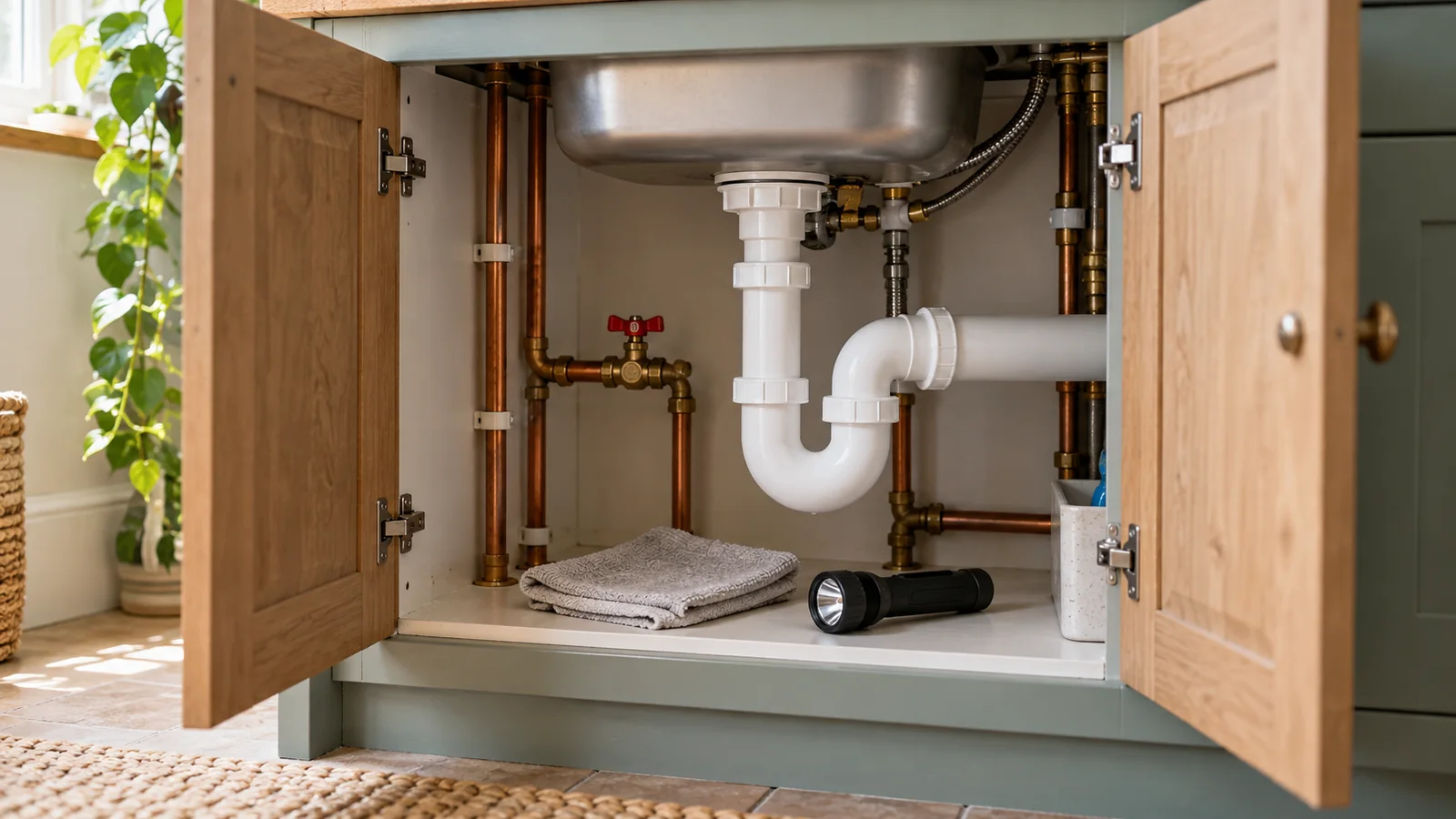
Before reorganising an under-sink cupboard, check accessible surfaces for fresh moisture, staining and damage, and keep the stop tap reachable. If water is actively escaping, deal with that immediately rather than completing a storage project. This is an observation checklist, not instructions to dismantle plumbing or work near wet electrics.
The useful outcome is a clear description for a plumber or landlord and a cupboard that does not hide or obstruct a developing problem.
Start with the stop conditions
If water is near electrical equipment or sockets, do not reach into the wet area. Keep people away and obtain appropriate urgent help. A substantial leak, water entering another flat or a rapidly spreading wet area requires prompt action, not a seven-day monitoring exercise.
WaterSafe's leak guidance explains locating and using the internal stop tap to stop incoming water where appropriate and seeking qualified help. If you do not know which control serves your flat or cannot operate it safely, contact the responsible emergency repair service. Do not force a seized valve.
Clear a safe view without disturbing pipework
Remove movable stored items only if the area is safe. Keep cleaning products in their labelled containers and out of reach of children or anyone at risk. Do not stack them temporarily where they create another hazard.
Look at the cupboard floor, back panel and accessible pipe areas. Photograph the initial state. Avoid moving hoses, tightening fittings or pulling an appliance forward to find the source. Those actions can worsen a fault or introduce a new one.
For the subsequent layout, our small-kitchen organisation guide offers space ideas. Leak checks should come before storage purchases.
Make a repair record with five fields
Use this editorial reporting format:
- Location: cupboard, nearby appliance and exact visible wet area.
- Timing: first noticed, recurring or continuous, and any relevant ordinary activity.
- Appearance: fresh droplets, a wet patch, staining, swelling or another observable change.
- Extent: whether the area is growing or affecting adjacent surfaces, recorded without unsafe access.
- Action: who was informed, when, and any safe isolation or professional advice received.
Write “droplets visible beneath the waste pipe after the sink was used” rather than “the waste seal has failed”. The first is a useful observation; the second is an unverified diagnosis.
Distinguish monitoring from delaying repair
A previous stain does not prove an active leak, but a dry patch on one inspection does not prove the problem is resolved. Share the history with the repairer. Do not run repeated water tests through suspect plumbing to demonstrate a fault unless the responsible professional directs a safe procedure.
Imagine a tenant notices swollen cupboard flooring but no current drips. A clear report includes the date, photographs and recent observations. Buying an impermeable liner first could conceal later moisture and make inspection harder. This hypothetical example illustrates the sequence, not the cause of the swelling.
In rented property, use the landlord's repair reporting route and retain the reference. Responsibilities and escalation processes vary by tenancy and UK nation; this article does not assign legal liability or set a repair deadline.
Reorganise only after the problem is addressed
WaterSafe's general plumbing advice provides further help on internal stop taps and finding approved plumbers. Once a repair has been assessed, ask what evidence would indicate success and whether follow-up is needed.
Keep access to the stop tap, fittings and inspection areas. Use removable storage that can be lifted out without catching pipework. Do not attach organisers to pipes or treat the cupboard as a place for heavy unsupported shelving.
If damp appears elsewhere, our condensation observation guide can help you describe the location and timing. Do not assume a water leak and window condensation share one cause.
If moving items out of the cupboard exposes a wider storage problem, use our small-apartment organisation guide to prioritise accessible everyday items instead of immediately refilling the repaired space.
Frequently asked questions
Should I tighten a dripping fitting myself?
This guide does not diagnose the fitting or authorise a repair. Seek suitable advice rather than applying force to unfamiliar pipework.
Is a waterproof liner a leak fix?
No. It may hide moisture while the underlying fault continues.
Where is the stop tap in every UK flat?
There is no universal location. Identify yours before an emergency and confirm what it controls.
Can I keep using a sink with a small leak?
Ask the responsible repair professional. The visible size alone does not establish the consequence or safe use.
What should I send a landlord?
The location, timing, observations, photographs where safe and a request for repair assessment. Keep a copy and reference.
Put access before storage capacity
Check for active danger, record what you can safely see and report the problem. After assessment and repair, arrange removable storage around clear access rather than filling every available gap.
Grow Here Editorial
Editorial Team
Curating practical, evidence-backed advice for greener homes, sustainable systems, and intentional daily living across Grow Here.
Related Stories
Winter Window Condensation: A Seven-Day Observation Checklist
Record where and when condensation appears, check ventilation and recognise when a recurring damp problem needs investigation.
Drying Laundry in a Small Flat: A Winter Setup Guide
Choose a workable drying space by checking extraction, access, fabric care and repeat condensation before buying another appliance.
Freezer Inventory and Power-Cut Plan for UK Homes
Create an inventory you can read without opening the freezer, record an outage and find the right food-safety advice before deciding what to keep.