Winter Window Condensation: A Seven-Day Observation Checklist
Record where and when condensation appears, check ventilation and recognise when a recurring damp problem needs investigation.

Grow Here Editorial
Editorial Team
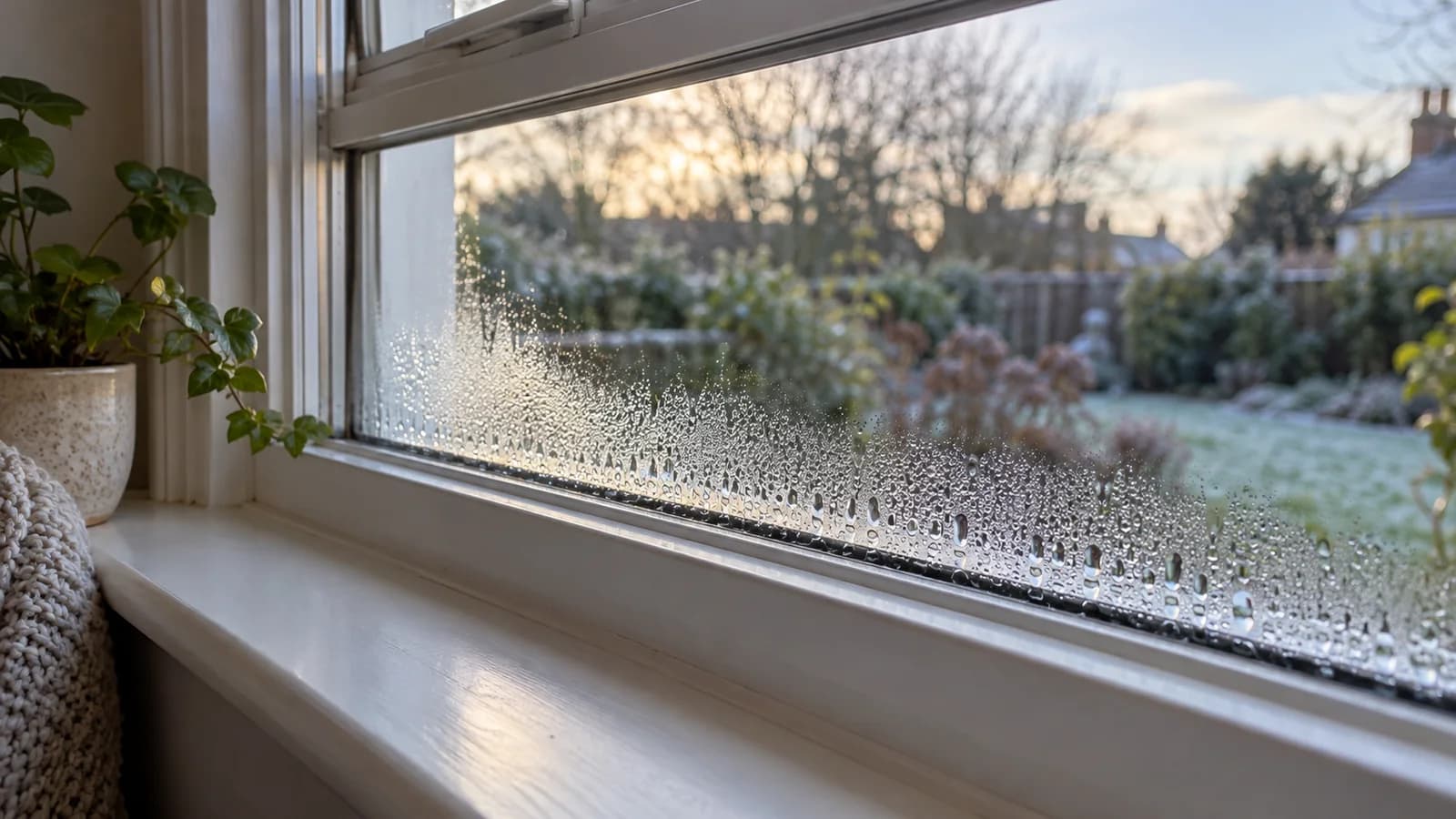
Recurring winter window condensation needs investigation, especially when it accompanies mould, a musty smell or damp patches. Start by recording where and when it appears, checking that existing ventilation works, and reporting building defects promptly. A log can clarify a pattern; it cannot diagnose the building or prove who is responsible.
This practical checklist suits UK households preparing for colder weather. It does not replace a survey, mould remediation advice or a landlord's responsibilities. You do not need to wait seven days before reporting a serious or recurring problem.
Separate observations from explanations
The Energy Saving Trust ventilation guide explains that ventilation removes stale indoor air and helps reduce condensation risk. It distinguishes controlled ventilation from unwanted draughts. Persistent condensation and mould are reasons to investigate ventilation, but their absence does not establish good indoor air quality.
Write “water on the bedroom glass at 07:30” rather than “the windows are defective”. Equally, do not assume the household caused the problem. An accurate record leaves room to investigate the building, ventilation system and moisture sources together.
Make a simple observation sheet
Create one row each morning and another after an event such as cooking or showering when a problem is noticeable. Use these fields:
- Date, time and room.
- Exact location: room-facing glass, frame, wall, ceiling or between glazing panes.
- What you can see, including whether the area is wet, stained or visibly mouldy.
- Recent activity and whether the extractor was operating.
- Window and vent positions, recorded without changing the system to run an experiment.
- Weather observation and any relevant leak or maintenance history.
- Photograph reference and action taken or reported.
Keep photographs consistent by using the same viewpoint. Avoid including people, documents or valuables if sharing images with a landlord or contractor.
Follow a seven-day sequence
This sequence is an editorial record-keeping tool, not a building diagnostic protocol.
Day 1: map the locations
Sketch the affected rooms. Mark the exact surfaces and note whether the issue is confined to one location. Photograph damage before cleaning or other changes where safe, without delaying necessary action.
Days 2 and 3: record the existing ventilation
Identify extractors, trickle vents and any whole-home system. Note visible obstruction or an obvious fault. Check instructions rather than switching a continuous system off. Do not dismantle fans, alter wiring or change ventilation serving a combustion appliance.
Days 4 and 5: compare events
Record what happens after ordinary household activities. Keep descriptions neutral: “extractor did not start” is more useful than “bad ventilation”. Do not deliberately create steam or reduce heating to provoke condensation.
Days 6 and 7: prepare a short summary
List the repeated locations, observed faults, dates of earlier reports and unanswered questions. Keep the raw notes alongside the summary so an investigator can examine exceptions.
For example, a fictional household might record bedroom glass wet on five mornings, one damp ceiling patch after rain, and a bathroom fan that never starts. Those are three observations requiring assessment; the log does not establish a single shared cause.
Check existing ventilation safely
Energy Saving Trust generally advises leaving trickle vents open and using extraction during moisture-producing activities. Whole-home mechanical systems may require a different approach: follow their instructions. Do not seal intentional vents as part of a draught-proofing project.
For the broader efficiency picture, see our home energy-saving guide. When reviewing small-home organisation, also check that storage has not obstructed ventilation access. Neither storage changes nor lower energy use should be treated as a cure for a building defect.
Know what the log cannot settle
The Energy Saving Trust guide to damp and condensation distinguishes condensation from other damp problems and discusses causes requiring repairs. A ventilation routine will not repair a roof leak. Ask for investigation when an area stays damp, staining follows rain, an extractor fails or mould recurs.
If you rent, report the issue in writing through your landlord's repair process and retain copies. Housing duties and escalation routes differ across England, Scotland, Wales and Northern Ireland; get advice appropriate to your nation and tenancy. This article does not set legal deadlines.
Frequently asked questions
Must I complete the log before reporting mould?
No. Report the problem promptly. Continue recording only where useful and safe.
Does condensation prove a window needs replacing?
No. Record its precise location and seek assessment. Water between panes is a different observation from moisture on the room-facing surface.
Should I close vents to save heat?
Do not block intended ventilation. Check the system instructions and seek advice if it is faulty, noisy or causing concern.
Will a humidity reading identify the cause?
No. It adds context at a particular time and position. It cannot establish the condition of walls, leaks or the whole ventilation system.
Can a dehumidifier replace repairs?
It cannot fix a leak or broken extractor. If used, follow its instructions and keep investigating the underlying problem.
Prepare the next action
Start with today's photograph and a plain description of the affected surface. Report an obvious defect immediately. Then use the log to prepare three questions: what needs inspection, which repair is proposed, and how will its effectiveness be checked? Keep those answers with the record.
Grow Here Editorial
Editorial Team
Curating practical, evidence-backed advice for greener homes, sustainable systems, and intentional daily living across Grow Here.
Related Stories
Drying Laundry in a Small Flat: A Winter Setup Guide
Choose a workable drying space by checking extraction, access, fabric care and repeat condensation before buying another appliance.
Under-Sink Leak Checks: What to Record Before Reorganising
Inspect accessible cupboard areas without dismantling plumbing, preserve stop-tap access and prepare a clear repair report.
Freezer Inventory and Power-Cut Plan for UK Homes
Create an inventory you can read without opening the freezer, record an outage and find the right food-safety advice before deciding what to keep.