Drying Laundry in a Small Flat: A Winter Setup Guide
Choose a workable drying space by checking extraction, access, fabric care and repeat condensation before buying another appliance.

Grow Here Editorial
Editorial Team
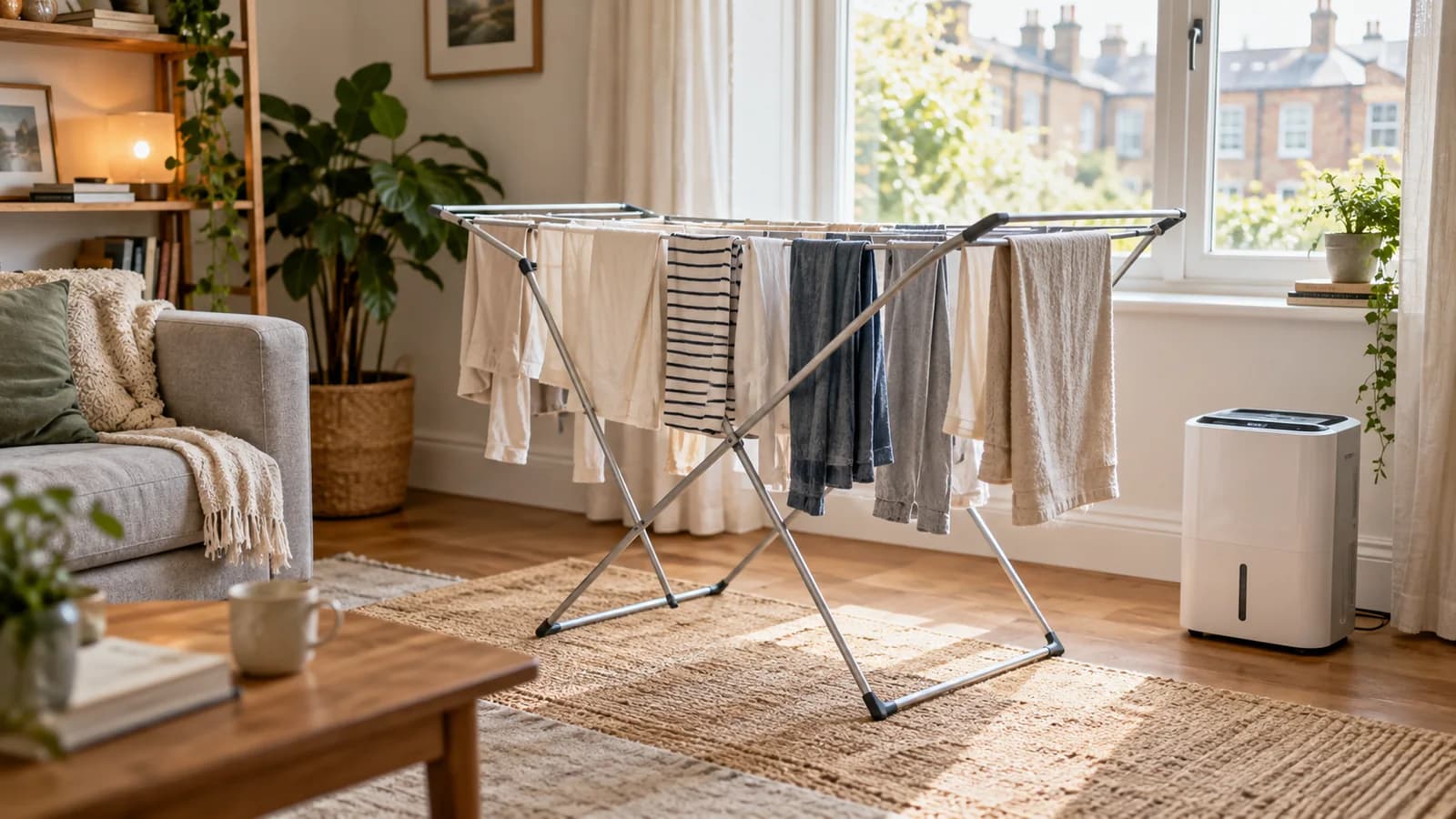
For winter laundry in a small flat, choose a drying position with a workable moisture-removal route, leave space around clothes and check the room afterwards. An airer that fits physically may still be unsuitable if it blocks access or leaves the room persistently damp. There is no universal cheapest method for every load and home.
Start with the layout and the clothes you actually wash. Compare appliances only after you know what the drying arrangement needs to achieve.
Define the drying job
For one normal wash, list the bulky items, fabric restrictions and when each item is needed. A load of towels and a few lightweight shirts are different jobs even when the drum looks equally full.
Check care labels and the washing machine instructions before changing the spin programme. A higher permitted spin may leave less moisture to remove afterwards, but it is not suitable for every fabric. Do not overfill the drum or ignore a fault just to shorten the routine.
Our small-apartment organisation guide helps you protect access routes; make the airer's footprint part of that plan rather than an afterthought.
Assess the room before positioning the rack
The Energy Saving Trust ventilation guide identifies indoor laundry as a reason to consider additional ventilation. Existing mechanical systems should be used according to their instructions rather than switched off or modified to suit a generic rule.
Check four things:
- Where will moisture go: a functioning extractor, designed ventilation or another suitable arrangement?
- Can doors, vents and controls remain accessible?
- Are clothes clear of heaters and electrical equipment, with the manufacturer's required space?
- Can someone use the room safely while the load is drying?
Avoid treating the only escape route as spare drying space. Do not drape clothes over heaters. If a room already has recurring mould or a leak, address that problem rather than adding more drying activity to it.
Compare three realistic options
Ordinary airer: modest equipment requirements, but drying depends on room conditions and moisture removal. It occupies space until the whole load is ready.
Dehumidifier and airer: may suit a room and appliance designed for that use. Account for the machine's clearance, collection tank, operating conditions and electricity use. It does not repair a building defect.
Suitable tumble dryer or laundrette: may free floor space sooner, but involves fabric restrictions, cost, installation requirements or travel. A heat-pump dryer and an older vented model are not equivalent comparisons.
The Energy Saving Trust damp guidance discusses moisture reduction and ventilation alongside building problems. No drying method makes unresolved damp harmless.
Record the complete result
Use this editorial comparison sheet for two ordinary loads: load description; spin programme; drying position; start and finish; any measured electricity; items still damp; room observations. Only compare similar loads and conditions, and label the result as your household observation.
Imagine two arrangements costing 30p and 45p in measured electricity. If the first leaves sheets damp into the following day and obstructs the room, the lower direct cost may not make it the better choice. Conversely, a fast result does not justify an unsafe position. The figures here are illustrative, not current tariff claims.
For calculation details, use our dehumidifier running-cost worksheet. Keep that electricity comparison separate from the room-suitability decision.
Troubleshoot persistent problems
Sleeves or waistbands stay wet: unfold thick sections and improve spacing within the arrangement's safe limits.
The room is still wet after clothes dry: investigate the ventilation and building. Record the pattern with our condensation checklist.
The rack blocks daily life: smaller planned loads may fit better, but account for extra washing cycles. Compare the entire routine.
An appliance smells hot or behaves abnormally: stop using it and follow manufacturer safety advice. Do not continue a comparison through a suspected fault.
When drying becomes a wider energy project, our home energy-saving guide helps compare it with other household changes rather than judging one appliance in isolation.
Frequently asked questions
Should I dry clothes in the bedroom?
Assess the available moisture-removal route, existing damp and safe use of the room. A bedroom is not automatically suitable because it is empty during the day.
Is a heated airer always cheaper than a dryer?
No. Compare complete drying energy for similar loads, plus any associated equipment, using your tariff.
Should I close every vent when using a dehumidifier?
Do not block required building ventilation. Follow the appliance and ventilation-system instructions together.
Can I leave a laundry appliance running overnight?
Follow safety guidance and manufacturer instructions. Do not schedule use solely around a cheaper rate while ignoring supervision requirements.
Does condensation mean the clothes are nearly dry?
No. It is a room observation, not a measure of remaining moisture in the fabric.
Make one workable change
Choose the safest suitable position, space a normal load and record the outcome. Resolve persistent damp separately. Then compare costs for the arrangements that actually meet your fabric, space and household needs.
Grow Here Editorial
Editorial Team
Curating practical, evidence-backed advice for greener homes, sustainable systems, and intentional daily living across Grow Here.
Related Stories
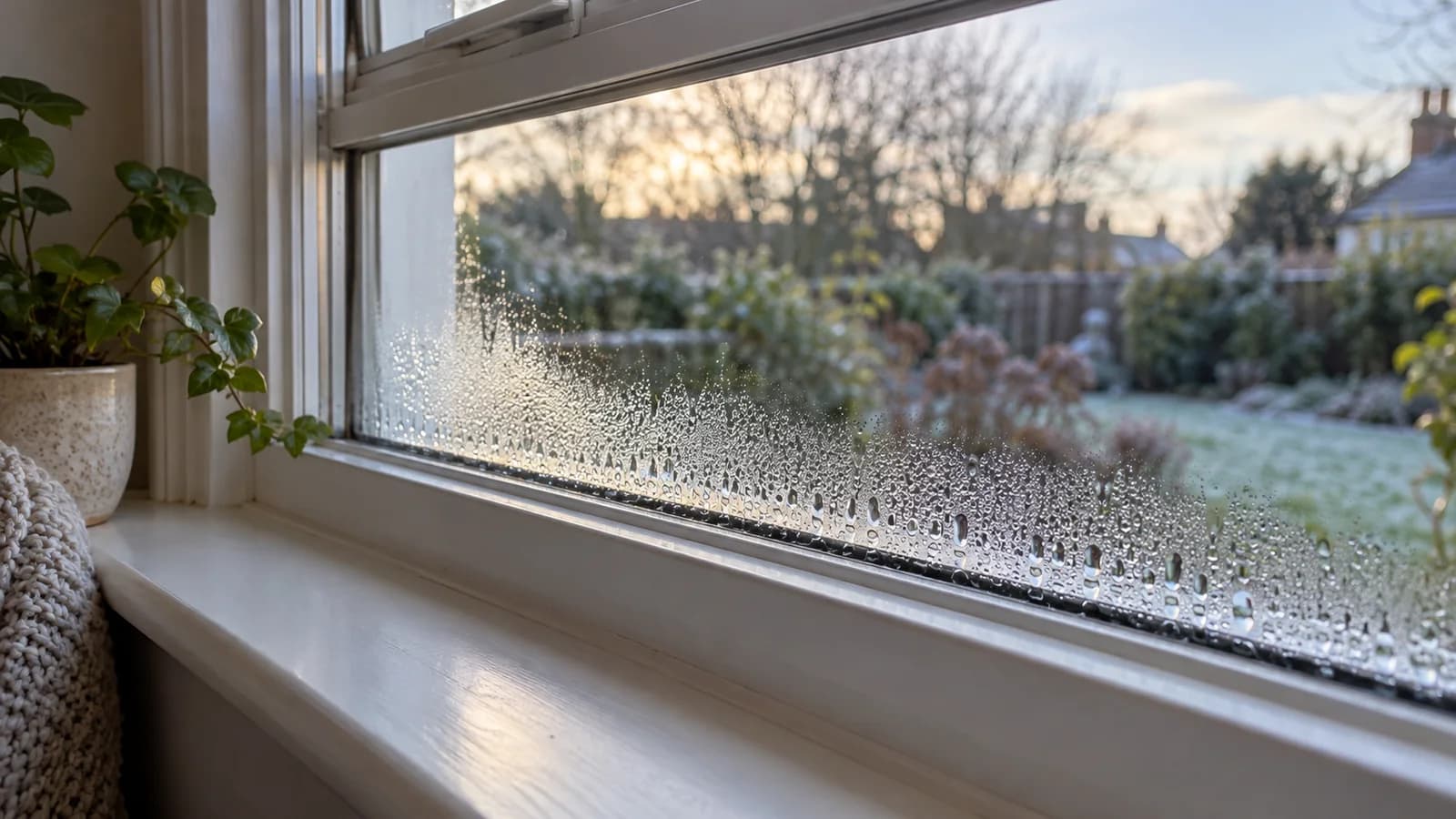
Winter Window Condensation: A Seven-Day Observation Checklist
Record where and when condensation appears, check ventilation and recognise when a recurring damp problem needs investigation.
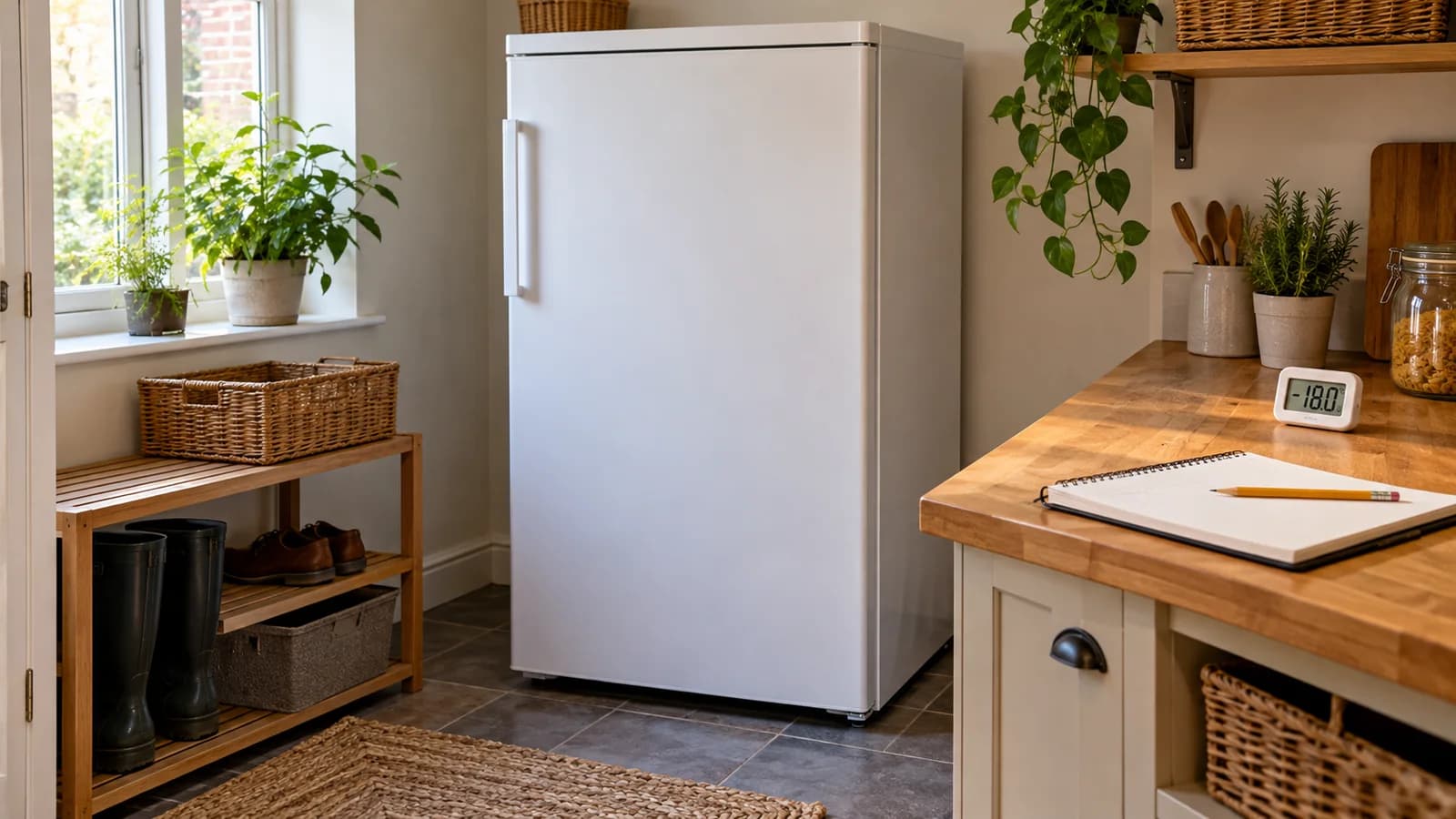
Freezer Inventory and Power-Cut Plan for UK Homes
Create an inventory you can read without opening the freezer, record an outage and find the right food-safety advice before deciding what to keep.

An Eat-First Box for Your Fridge: Reduce Waste Safely
Build a small priority zone without losing use-by dates, opening instructions or separation between raw and ready-to-eat foods.