Dehumidifier Running Costs: Calculate Your Actual UK Cost
Use measured kWh and your tariff to compare a complete drying session, including time bands and purchase-cost assumptions.

Grow Here Editorial
Editorial Team
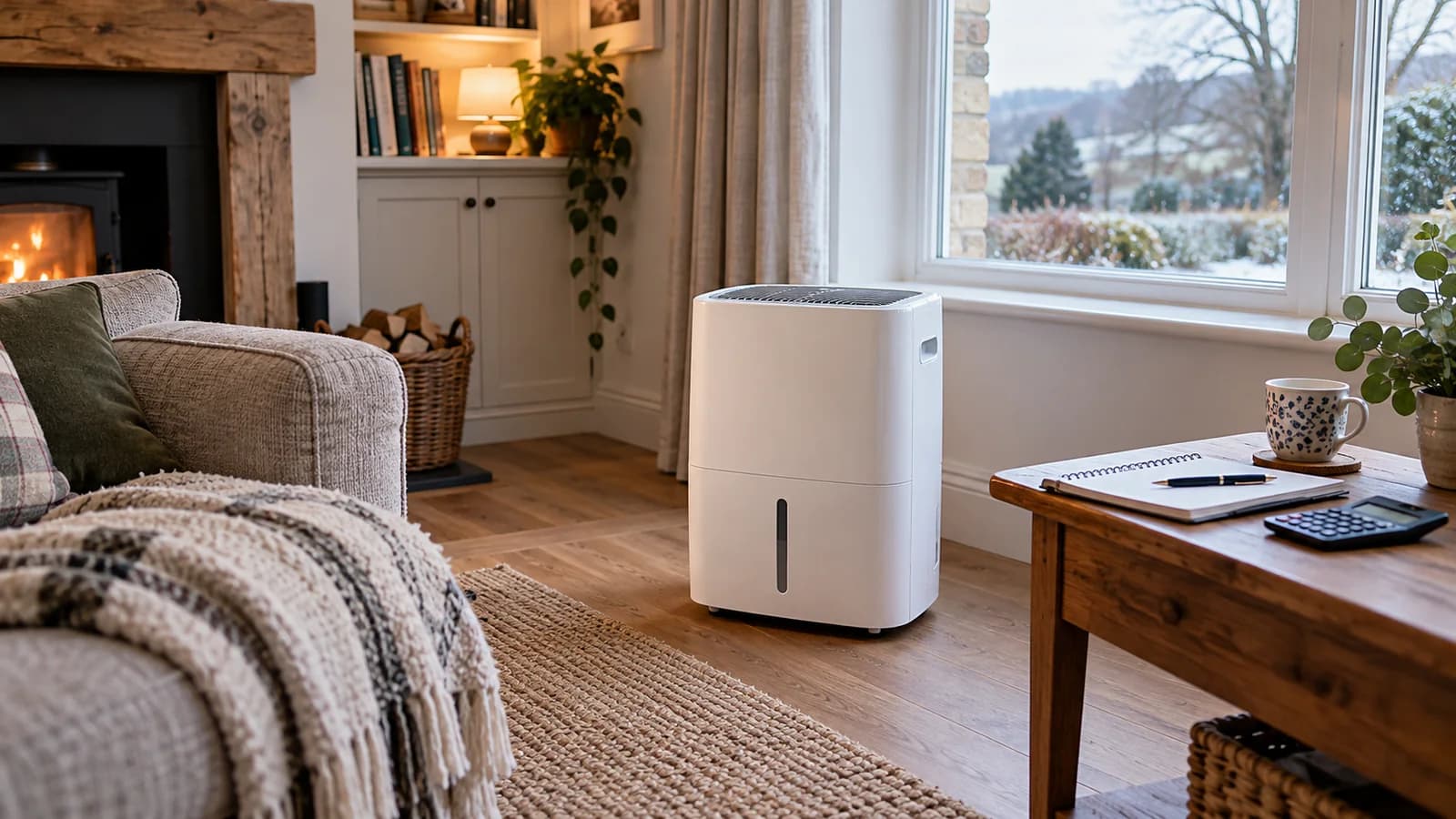
To calculate dehumidifier electricity cost, multiply the energy used in kWh by your electricity unit rate. For a time-of-use tariff, calculate each rate period separately. A rated wattage multiplied by running hours is an estimate; a representative energy reading can better capture changes in operation.
Use your bill or tariff agreement for the rate. The examples below use invented inputs to explain the arithmetic, not a current price-cap rate or an expected result for your home.
Start with the right units
Watts measure power. Kilowatt-hours measure energy used over time. Divide watts by 1,000 to get kilowatts, then multiply by hours only if the assumed power is appropriate throughout that period.
For an illustrative 250 W constant load running six hours:
250 ÷ 1,000 × 6 = 1.5 kWh.
At an illustrative 25p/kWh:
1.5 × £0.25 = £0.375, about 38p.
A real dehumidifier may vary its draw or stop and restart. Treat this as a simplified estimate until you have a suitable measurement, not a promise that every six-hour session costs 38p.
Measure a session only where equipment is compatible
Check the dehumidifier and monitor instructions, ratings, clearances and operating conditions. Our plug-in monitor guide explains the measurement record. Do not add an unsuitable timer, smart plug or extension merely to obtain readings.
Record the complete session, start and finish, cumulative kWh difference, room conditions and the job being done. For laundry, note the load and spin programme. A one-hour reading at startup should not be multiplied into an annual total without understanding how later operation differs.
The Centre for Sustainable Energy monitoring overview is useful background on making consumption visible. Your measurements should support a decision, not override safe use instructions.
Handle time-of-use rates honestly
Suppose a session uses 0.6 kWh during a 15p period and 0.9 kWh during a 30p period. The illustrative cost is:
(0.6 × £0.15) + (0.9 × £0.30) = £0.36.
You need energy by rate period for this calculation. If the monitor gives only a total, use a clearly labelled estimate or an appropriate compatible data source. Do not apply the cheapest rate to the entire session when some use occurred outside that window.
The daily standing charge normally remains payable whether the appliance runs or not. Do not count it as a saving from turning this one appliance off. Include other tariff differences when comparing entire tariffs, which is a separate calculation.
Compare the same outcome
A dehumidifier's hourly cost is not a fair comparison with a dryer's cost per completed load. Record total energy for similar loads that reach a comparable dryness. If another fan or heater is used, include its attributable energy where measurable and describe what remains uncertain.
For room suitability, see our small-flat laundry setup guide. That article covers access and moisture management; a low running cost cannot establish that a room is appropriate.
The Energy Saving Trust damp guide discusses dehumidification alongside ventilation and building defects. An appliance does not repair water ingress or a failed extractor.
Include the equipment cost when deciding to buy
Imagine a suitable machine costs £160 and saves 20p per comparable session against your existing workable method. Recovering purchase cost alone takes 800 sessions. That ignores maintenance, lifespan and financing, and the assumed saving may not persist. It is a scenario, not a purchase recommendation.
Borrowing or using existing equipment may make more sense for an occasional problem. Do not buy a larger machine simply because its advertised litres-per-day figure is higher; check the test conditions and suitability for your actual room.
Use our home energy-saving guide to compare the likely scale of this expense with other household uses. If buying equipment is still justified, our appliance selection guide helps consider suitability alongside efficiency claims.
Frequently asked questions
Does 300 W mean 0.3 kWh every hour?
Only if it draws 300 W continuously for the full hour. Actual operation can vary.
Can I use the manufacturer's maximum wattage?
Use it as a labelled assumption, not a measured average. Check what the specification represents.
Is the cheapest overnight rate always best?
Do not ignore safe use, household needs or the rest of the tariff. Cost is only one constraint.
Why does one session cost more than another?
Compare load, duration, settings, room conditions and rate periods before concluding the appliance is faulty.
Should I add the standing charge?
Not when estimating the extra energy cost of this appliance if that charge would be paid anyway.
Use one complete record
Measure or clearly estimate a representative session, apply the correct rate periods and compare the same outcome. Keep purchase cost separate from running cost. That produces a decision you can update when your tariff or laundry routine changes.
Grow Here Editorial
Editorial Team
Curating practical, evidence-backed advice for greener homes, sustainable systems, and intentional daily living across Grow Here.
Related Stories
Letterbox Draught-Proofing: Checks Before Fitting a Brush
Check the source of the draught, door permissions, safe closure and ventilation before choosing a letterbox flap or brush.
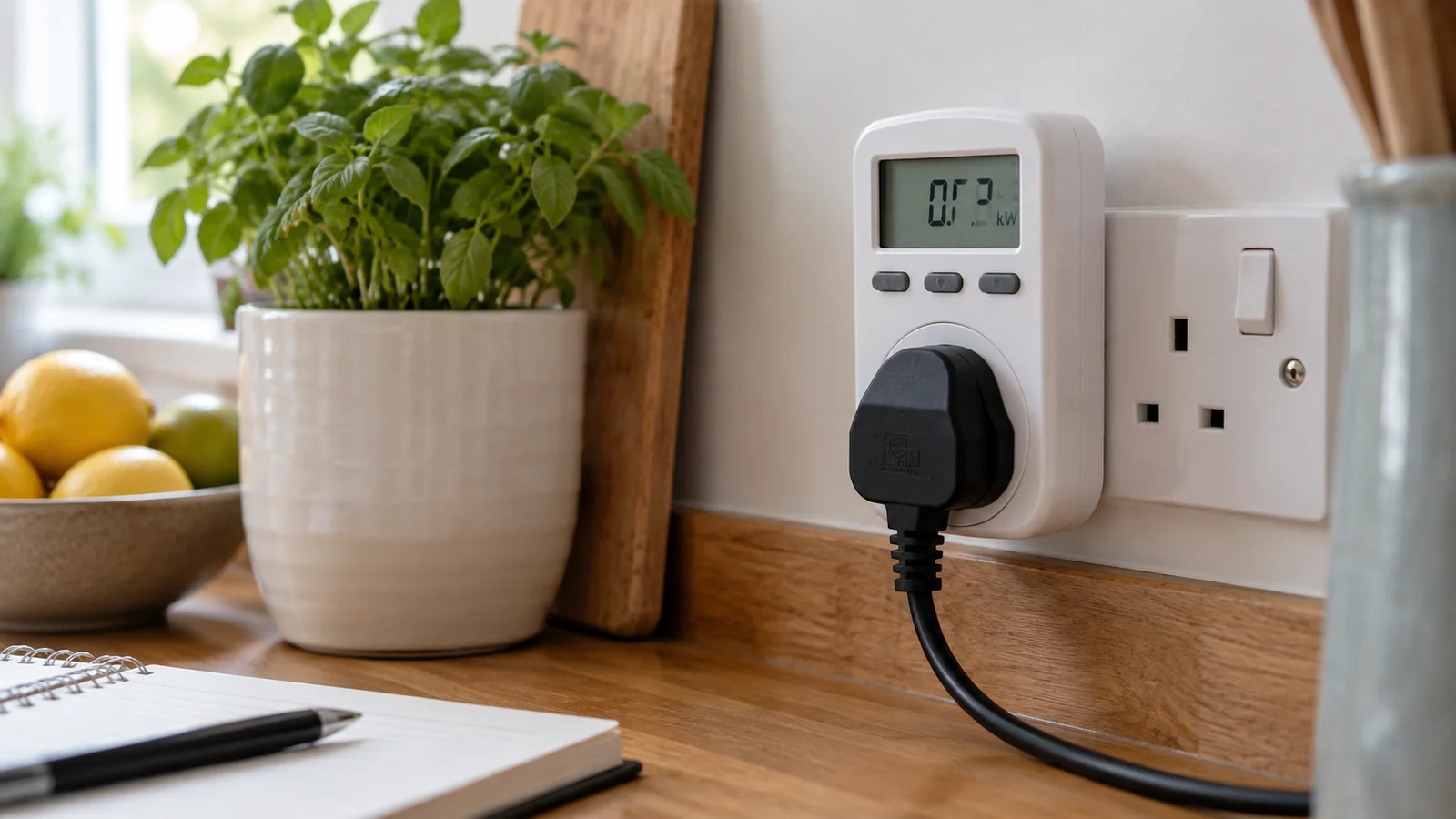
Using a Plug-In Energy Monitor in a Rented Flat
Measure suitable plug-in appliances without altering wiring, then turn kWh readings into useful household decisions.
Smart Meter Display and Bill Disagree? Check These First
Compare dates, units, tariff information and actual readings before treating an in-home display difference as a billing fault.