Letterbox Draught-Proofing: Checks Before Fitting a Brush
Check the source of the draught, door permissions, safe closure and ventilation before choosing a letterbox flap or brush.

Grow Here Editorial
Editorial Team
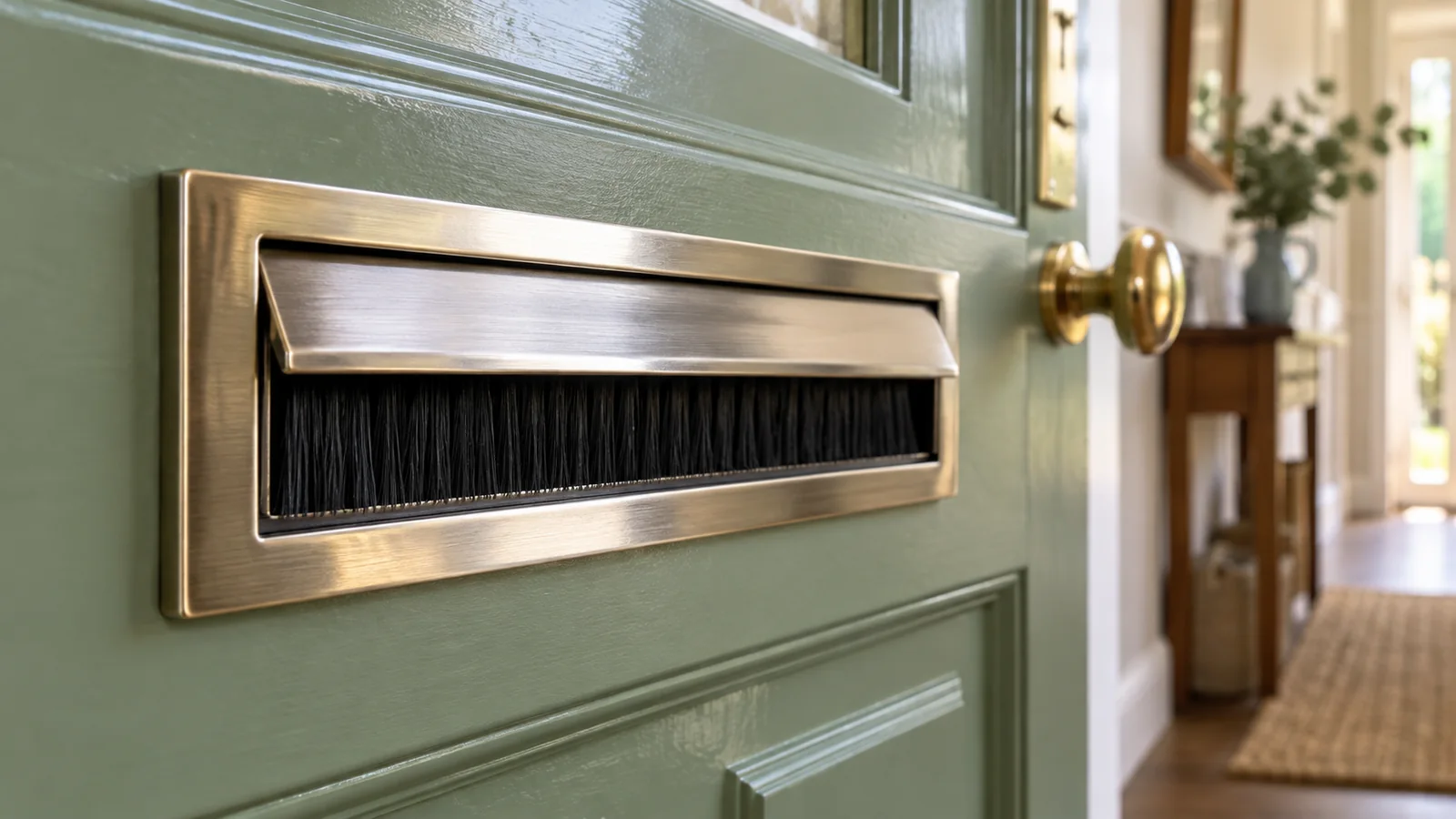
Before fitting a letterbox brush, confirm that the letterbox is the source of the draught and that the proposed fitting is suitable for the door. Check permission, especially for flat entrance or fire doors, and preserve intended ventilation. A cheap accessory is useful only if the door still closes, latches and performs as required.
This is a selection and checking guide. It does not approve modifications to a fire door or tell you to drill into an unfamiliar door assembly.
Confirm what you are trying to fix
From inside, check whether the flap closes normally and whether debris or damage is visible. Observe during ordinary conditions rather than using a flame or smoke to find moving air. Keep fingers clear of hinges and springs.
List separate issues: flap not returning; draught around the door perimeter; gap at the threshold; intentional wall vent nearby. They need not share a solution. Our home energy guide provides wider priorities without treating every opening as a defect.
The Centre for Sustainable Energy draught-proofing guide describes flaps and brushes for letterboxes and warns against blocking flues, air bricks and trickle vents. Its advice also notes the ventilation role of internal door undercuts.
Check the door before shopping
Find the door's documentation or ask the responsible landlord, freeholder or managing agent. If it is a fire-resisting assembly, an ordinary retail fitting may not be appropriate. The required product, installation and permissions need confirmation from the responsible competent person.
For any suitable ordinary door, measure the opening and the available fitting area. Check thickness, fixing method, clearances, existing hardware and whether the product is intended for that material. Keep the manufacturer's instructions with your measurements rather than relying on a listing photograph.
Do not assume an adhesive product is automatically permitted or compatible. It can still obstruct movement or damage a finish.
Use a three-way decision
- Existing flap is damaged: ask whether repair or a suitable replacement is needed before adding a second accessory.
- Door and fitting are confirmed suitable: follow the approved product instructions and check operation throughout installation.
- Fire-door status, permissions or compatibility are unclear: stop and obtain clarification. Do not trial-drill first.
For a rental, record the proposed product and fitting method when asking for permission. That is easier to assess than a general request to “draught-proof the door”.
Verify operation after approved work
The Energy Saving Trust door draught-proofing advice identifies a flap or brush as a possible letterbox treatment. Treat it as a category of solution, not confirmation for your door.
Check that the letterbox passes normal post without jamming, the flap returns, and the door opens, closes and latches properly. Verify any required closer operation with the responsible person. Check for snagging, sharp edges and loose fixings as specified by the product.
Imagine a new brush reduces a draught but catches bulky post, leaving the original flap open. The apparent improvement has created an operating fault. Adjust only as the instructions allow or arrange assessment; do not keep adding material around it. This example is hypothetical.
Watch for the wrong follow-up response
If the hallway remains cold, do not block nearby vents or permanently seal internal door gaps. Review the remaining sources and heating arrangement separately. If condensation or mould is present, record it using our winter observation checklist and seek investigation before adding more sealing.
Avoid calculating a guaranteed annual saving for one letterbox from broad whole-home draught-proofing figures. Savings depend on the starting condition and household, and may not justify an unsuitable modification.
In a compact hallway, follow the clear-access approach in our small-apartment guide before adding a door curtain or loose draught excluder that could obstruct normal use.
Frequently asked questions
Can any letterbox brush go on a flat entrance door?
No. Check the door assembly, required performance, product suitability and permissions.
Is tape across the opening a good permanent fix?
It can interfere with intended use and is not a substitute for a suitable assessed repair.
Should I seal the vent beside the door too?
Do not block intentional ventilation. Identify its purpose first.
Will a thicker brush always work better?
Fit and operation matter. Excess material can stop post passing or a flap closing.
How much money will it save?
There is no reliable universal saving for an individual letterbox. Do not treat whole-home estimates as a product guarantee.
Confirm compatibility first
Identify the actual draught, check the door's requirements and choose an approved fitting if appropriate. After installation, verify normal operation and keep ventilation functioning. A successful repair must improve comfort while preserving the door's required behaviour.
Grow Here Editorial
Editorial Team
Curating practical, evidence-backed advice for greener homes, sustainable systems, and intentional daily living across Grow Here.
Related Stories

Dehumidifier Running Costs: Calculate Your Actual UK Cost
Use measured kWh and your tariff to compare a complete drying session, including time bands and purchase-cost assumptions.

Using a Plug-In Energy Monitor in a Rented Flat
Measure suitable plug-in appliances without altering wiring, then turn kWh readings into useful household decisions.

Smart Meter Display and Bill Disagree? Check These First
Compare dates, units, tariff information and actual readings before treating an in-home display difference as a billing fault.